
|
|
|

|
 Follow us
|
|
|

|
|
|
Many of our Gems already have a Gem Identification Reports listed online. We use fully accredited Gemological Laboratories able to perform most of our Gemstone Identification and Diamond Grading of Gems and Jewelry. Our Gem listings are based on the GIA "Color Stone Grading System". If you are looking for a reputable Gem & Jewelry Appraiser, we recommend: GUILD LABS You should expect at least $100 fee for a written Gem Appraisal. AGL | AGTA | GIA | GRS | GUILD | GUBELIN | SSEF Gemological reports can cost $100 to $1,000, depending on the gem and how much detail you want on the report.
|
|
|
|||||
|
The GIA type Color Scale:
The 3 charts below are based on the GIA (Gemological Institute of America) "Color Stone Grading System", where the Color with it's various Hues, the Tone, and the Saturation of color in a particular gem is listed. You will normally see this system identified by a letter or set of letters, followed by two numbers. The letters are abbreviations of the Color and Hues visible... the first number is the Tone or lightness/darkness of a particular gemstone... and the second number in sequence is the Saturation of color in the gem. So, as an example, when you see a Ruby given the color "R", this would indicate the color is "Red" meaning the primary color is Red and there appears to be no noticeable secondary color... if the tone/saturation numbers were listed as "6/5"... this would indicate the gem has "Medium-dark" tone and "Strong" saturation of color... making this particular gem fall in the "good" category. |
|
GIA Type COLOR SCALE |
|
|
|
|
|
|
|
|
|
|
|
|
|
|
|
|
|
|
|
|
|
|
|
|
|
|
|
|
|
|
|
|
|
|
|
|
|
|
|
|
|
|
|
|
|
|
|
|
|
|
|
|
|
|
|
|
|
|
|
|
|
|
|
|
|
|
|
|
|
|
|
|
|
|
|
|
|
|
|
|
|
The Tone and Saturation Scale: Is based on a determination of the lightness or darkness of a particular gemstone. Tone should be considered along with the Color to properly understand the depth of color in the gem. Even though it may have good primary color, if it's too light in tone, it will not be rich enough... or... if the color is too dark, it will sacrifice brilliancy and transparency. Saturation should be considered along with the Color and Tone to properly understand the amount and evenness of the color that is saturated throughout the gem. |
|
|
GIA Type TONE SCALE |
|
|
|
|
|
|
|
|
|
|
|
|
|
|
|
|
|
|
|
|
|
|
|
|
|
|
|
|
|
|
|
|
|
|
|
|
|
|
|
|
Understanding the GIA type Colored Stone Grading System : The stone is first identified as to gem type. After being thoroughly cleaned, the stone is held by its girdle over a neutrally colored background, and the gemologist looks at it face-up from a comfortable distance ? usually about 18 in. (45 cm) ? in strong, diffused, daylight-equivalent lighting, with the light source somewhere around 10 in. (25 cm) above the stone. The stone is then rocked back and forth up to a total of 30 degrees as the tone, hue, and saturation judgments are made.
The following examples will help you understand the process involved in how a gem's color is determined. Let's first look at the illustration to the right. This example tone chart starts with #2 very light, and goes to #8 very dark, as the tone examples. The gem's tone is determined first, and in this example it is determined that the tone is #5 medium.
The sample stone is thereby graded very slightly bluish green (vslbG), medium tone (5), vivid saturation (6). |
|
|
AGL/GIA CLARITY COMPARISON CHART |
|
| AGL | GIA TYPE I | GIA TYPE II | GIA TYPE III | ABBREVIATED DEFINITION |
| F1 | VVS | MINUTE TO NOT DETECTABLE | ||
| LI1-LI2 | VS | VVS | MINOR | |
| MI1 | SI1 | VS | VVS | NOTICEABLE TO OBVIOUS |
| MI2 | SI2 | SI1 | VS | NOTICEABLE TO OBVIOUS |
| HI1 | SI2 | SI1 | OBVIOUS TO PROMINENT | |
| SI2 | OBVIOUS TO PROMINENT | |||
| HI2 | I1 | I1 | PROMINENT (MODERATE AFFECT ON APPEARANCE OR DURABILITY) |
|
| EI1 | I2 | I2 | I1 | PROMINENT (CONSIDERABLE AFFECT ON APPEARANCE OR DURABILITY) |
| PROMINENT (SERVER AFFECT ON APPEARANCE & DURABILITY) |
||||
| EI2 | I3 | I3 | I2 | PROMINENT (SEVERE AFFECT ON TRANSPARENCY OR DURABILITY) |
| I3 | PROMINENT (SEVERE AFFECT ON BEAUTY, TRANSPARENCY & DURABILITY) |
|||
| EI3 | DECLASSE | STONES NOT TRANSPARENT BECAUSE OF INCLUSIONS |
||
|
The COLORLESS GEM Color Scale: The chart below is based on the Diamond Color Grading System. COLOR GRADING of Diamonds arbitrarily begins with "D". "A", "B", and "C" are assumed to not exist. |
|
COLORLESS GEM GRADING SCALES |
| COLOR | GIA* | CIBJO* |
| COLORLESS | D | EXCEPTIONAL WHITE+ |
| E | EXCEPTIONAL WHITE | |
| F | RARE WHITE+ | |
| NEAR COLORLESS | G | RARE WHITE |
| H | WHITE | |
| I | VERY SLIGHTLY TINTED WHITE | |
| J | SLIGHTLY TINTED WHITE | |
| FAINT YELLOW
to FAINT BROWN |
K | TINTED WHITE |
| L | ||
| M | TINTED COLOR 1 | |
| VERY LIGHT YELLOW
to VERY LIGHT BROWN |
N | TINTED COLOR 2 |
| O | ||
| P | ||
| Q | ||
| R | ||
| LIGHT YELLOW to LIGHT BROWN |
S | TINTED COLOR 3 |
| T | ||
| U | ||
| V | ||
| W | ||
| X | ||
| Y | ||
| Z | ||
|
CONAC GREENISH BROWNISH |
|
|
|
PINKISH BLUISH |
|
|
|
GREEN BLUE PURPLE PINK RED |
|
|
|
|
||
|
|
||
| * GIA = Gemological Institute of America.
* CIBJO = Confederation Internationale de la Bijouterie, Joaillsrie, Ortevrerie, des diamants, perles et pierres precieuses. |
||
|
|||||
| The GIA type Clarity Scale:
The GIA Color Gem System is divided into Three Gem Types... "Type I", "Type II", and "Type III" All natural gems have inclusions... In plain terms clarity is simply how much "stuff " is inside the gem crystal. The less the "stuff" the more they cost. This again because of rarity by lack of imperfection. Below is a more descriptive explanation of these Clarity Grades for the 3 Gem Types: |
|
|
|
|
|
|
|
|
|
|
|
|
|
|
|
|
|
|
Type I Gemstones: Type I stones are usually eye-clean with no inclusions visible to the unaided eye. The stones in this type are usually of such high clarity that even minor inclusions can detract from their desirability.
|
|
|
|
|
|
|
|
|
|
|
|
|
|
|
|
|
|
|
Type II Gemstones
: Type II
stones typically show some eye-visible inclusions that do not detract from the
gem?s overall beauty. Many stones with inclusions visible to the unaided eye are
faceted for use in jewelry.
|
|
|
|
|
|
|
|
|
|
|
|
|
|
|
|
|
|
|
Type III Gemstones: Type III stones are almost always included and show eye-visible inclusions, but even specimens with obvious or prominent inclusions are often faceted for use in jewelry.
|
|
|||||
|
AwesomeGems.com strongly supports and meets the FTC (Federal Trade Commission) requirements to disclose gem treatments and/or offer accurate descriptions, and we have been disclosing gem treatments and offering accurate gem descriptions for as long as we have been in business. Not only do we disclose gem treatments on the same page as the listed gem, but it's listed directly under the gem "and" it has an additional link to a full explanation of the particular treatment method (if any). AwesomeGems.com also offers accurate descriptions of each gem or jewelry piece listed. You will find that our "Enhancement Codes and Treatment Terms" explain the majority of treatment methods used in the Gem Trade. Many of the gems we offer are "Natural" and "untreated", but the majority of the gems on the market are routinely enhanced or treated in some way, so we have always been concerned in disclosing any treatments that we know may exist as well as the affect it may have on the gem you are considering. |
|
code A:
|
Indicates that this gemstone has no known enhancement, or, this type of gem is very rarely enhanced. |
|
code E:
|
Indicates that this gemstone is typically, or routinely, enhanced by one or more of the methods below. |
|
code N:
|
Indicates that this gemstone has no known enhancement, and was tested by an independent gemologist, or our in-house gemologist, to assure you with a measure of certainty that the gem has no known enhancement. |
|
CE: |
Indicates a diamond has been been clarity enhanced to effect desired alteration of clarity. This process optically eliminates "feathers" (inclusions), which are naturally occurring imperfections found in most diamonds. This type of enhancement is considered permanent under normal wearing conditions, except the flame of a jewelers torch and/or boiling acids and bases may compromise the integrity of a CE diamond's enhancement. In the event the integrity of the enhancement is compromised, a CE manufacturer can restore the enhancement should this occur. The only special care requirement is to inform a jeweler the stone is a CE diamond before allowing work performed on that particular jewelry piece. Natural diamonds command a higher premium, depending on the diamond. |
|
Coated:
|
Indicates a Coating has been used as a surface treatment such as waxing, lacquering, enameling, inking, foiling, or sputtering of films to improve appearance, provide color or add special effects. This treatment is not considered to be permanent since the coating can be easily scratched off, so as a result it may create special care requirements, which we feel seriously reduces the value and therefore should affect your buying decision. |
|
Diffusion:
|
Indicates the gemstone has undergone Diffusion (or Bulk Diffusion) which is the use of one or more chemicals in conjunction with high temperatures to produce a subsurface layer of color and on occasion asterism producing inclusions. This treatment is considered to be permanent, but if the gem is heavily scratched, chipped, polished, re-cut, etc., the original color could then become visible. This treatment method is very inexpensive. Sapphire and Ruby that has undergone treatment with diffusion see a seriously reduction in the value and therefore should affect your buying decision. They cannot be equally compared to natural untreated gems. Topaz that has undergone treatment with diffusion can actually see an increase the value over Irradiation treated gems. |
|
Dye:
|
Indicates Dyeing has occurred. Dyeing is the introduction of coloring matter into a gemstone to give it new color, intensify present color or improve color uniformity. This treatment is normally not permanent and/or it may create special care requirements, which we feel seriously reduces the value and therefore should affect your buying decision. |
|
Epoxy:
|
Indicates a hardener was used to seal the surface of porous gem material with a colored or colorless Epoxy-like material. This is typically performed to improve appearance and/or durability of the gem as well as prevent inclusions from fracturing. This treatment method is permanent and normally does not create special care requirements, however, in recent years demand for natural top quality gemstones has caused untreated gems to command a higher premium, depending on the gem. |
|
Heat:
|
Indicates the stone has been heated to effect desired alteration of color, clarity, and/or phenomena. Most of the Citrine, Kunzite, Morganite, Tanzanite, Ruby, Blue Sapphire, Golden Sapphire, Orange Sapphire in the market is routinely heated. This enhancement method is permanent and normally does not create special care requirements. Heat enhancement has been an accepted trade practice for generations and normally it does not adversely affect the value of the gem, however, in recent years demand for unheated top quality Ruby and Sapphire has caused these gems to command a higher premium, depending on the gem. |
|
Irradiation:
|
Indicates the gemstone has undergone some form of gamma or electron Irradiation (in some cases, in conjunction with heat). Gamma or electron Irradiation typically either induces color centers to alter a gemstone's color or changes the valence state of impurities to improve the clarity. Gems routinely treated with this method are: Aquamarine (to produce dark blue Maxxie beryl), Colorless Beryl (to turn it green or yellow), Morganite (to deepen the pink color), Opal (to induce an orange-yellow body color), Diamond (to produce various colors), Quartz (to produce Smoky Quartz, Citrine, Amethyst, Amethyst-Citrine or Ametrine, and green-"gold" stones), Topaz (to blue and yellow), Pink Tourmaline (to produce Hot Pink and Red or Rubellite), and pale pink Kunzite (to lavender). Some of these irradiation-induced colors (e.g., Kunzite, Maxi Blue Topaz, and Yellow Beryl) may fade over time. This treatment method is considered to be permanent and normally does not create special care requirements. |
|
HPHT:
|
Indicates the diamond has been been heated while under pressure to effect desired alteration of color and/or clarity. HPHT diamonds, are natural diamonds that end up almost pure and flawless. The process basically speeds up the earths process of forming a diamond by squeezing a diamond to pressures of around 60,000 atmospheres. This "high pressure high temperature" treatment is most usually performed on off white diamonds that have some inclusions, and after the enhancement process the stone will be a more desired color with near flawless clarity. This treatment method is permanent and does not create special care requirements, however, natural diamonds command a somewhat higher premium, depending on the diamond |
|
Laser:
|
Indicates the stone has been laser drilled and chemicals were used to reach and alter the inclusions in the gem. This treatment is rarely performed on color gems, but is most often performed on diamonds that have obvious inclusions, after the treatment the stone will appear to have less obvious inclusions. This treatment method is permanent and normally does not create special care requirements, however, natural diamonds command a higher premium, depending on the diamond. |
|
Glass:
|
Indicates the stone has been heated to moderate temperatures (reportedly 9000F,4000C) to remove potential impurities from the fractures and improve color, then the stone is mixed with powders that are composed primarily of lead and silica but may also contain sodium, calcium, potassium, and metal oxides such as copper or bismuth. This mixture is then heated again, reportedly to approximately 9000F, fusing the powders into a glass that penetrates the fractures in the stone. Jewelers pickling solution can etch the glass filler, otherwise this treatment method is permanent and normally does not create special care requirements. |
|
Oil:
|
Indicates the surface-breaking cavities were filled by immersing the gemstone
in a colorless oil, wax, or natural resin that penetrates into the fissured or porous gemstone. This type of enhancement process is one of the oldest accepted trade practices in the business, with reports on it dating back over 600 years. Traditionally, such fillers have been oils of various types, cedar-wood oil being a common one. Some oils can come out of the stone if heated too much (but this is rare), however, if this were to happen the jeweler can simply re-oil it to return the gem to it's previous lustre. This type of oil enhancement does not normally affect the performance, durability, or value of the gemstone, and it does not create special care requirements. In recent years man-made resin materials, like Opticon, were introduced and are also being used to enhance certain gemstones, like emerald. This man-made resin enhancement process is an accepted trade practice that does not normally affect the performance or durability of the gemstone, and it does not create special care requirements, however we feel it seriously reduces the value and therefore should affect your buying decision. |
| MOH's
Hardness |
Mineral used for comparison | Simple Hardness | Cutting Hardness (A. Rosiwal) |
| Diamond | 140,000.00 |
||
| Ruby, Sapphire, Alexandrite, Chrysoberyl | 1,000.00 |
||
| Aquamarine, Emerald, Morganite, Spinel, Topaz | 175.00 |
||
| Amethyst, Citrine, Garnet, Iolite, Kunzite, Peridot, Tanzanite, Tourmaline, Zircon | Scratches window glass | 120.00 |
|
| Diopside, Lapis lazuli, Orthoclase, Turquoise | Can be scratched with a steel file | 37.00 |
|
| Apatite, Obsidian, Sphene, Glass | Can be scratched with a knife | 6.50 |
|
| Coral, Fluorite, Pearl | Can easily be scratched with a knife | 5.00 |
|
| Calcite, Ivory | Can be scratched with a copper coin | 4.50 |
|
| Amber, Gypsum | Can be scratched with a fingernail | 1.25 |
|
| Talc | Can be scratched with a fingernail | 0.03 |
|
|||||
Color |
Modern | Traditional | Alternate | |
| January | Brick Red | Garnet | Garnet | Rose Quartz |
| February | Purple | Amethyst | Amethyst | Black Onyx Moonstone |
| March | Seafoam Blue | Aquamarine | Bloodstone | Rock Crystal |
| April | Colorless | Diamond | Diamond | White
Sapphire White Topaz |
| May | Green | Emerald | Emerald | Green
Tourmaline Tsavorite Garnet |
| June | White | Pearl Moonstone |
Alexandrite | Opal |
| July | Red | Ruby | Ruby | Rubellite Tourmaline |
| August | Yellowish-Green | Peridot | Jade | Star Sapphire |
| September | Royal Blue | Blue Sapphire | Blue Sapphire | Iolite Lapis Lazuli |
| October | Pink | Opal Pink Tourmaline |
Jasper | Pink
Sapphire Morganite -Pink Emerald |
| November | Golden Yellow | Yellow
Topaz Yellow Citrine |
Yellow Citrine | Yellow
Sapphire Tiger's Eye |
| December | Sky Blue | Blue Topaz Tanzanite |
Blue
Zircon Turquoise |
Blue
Spinel Lapis Lazuli |
| Birthstones listed
in the "Modern" column are the Official Birthstones adopted by the American
National Association of Jewelers, Jewelers of America. These
Birthstones were Officially adopted in 1912. Tanzanite,
a violet-blue gem from East Africa, is so hot it is the first gem added to the
birthstone list since 1912
Stones listed in the "Traditional" column contains older birthstones and is sometimes combined with the modern birthstone list. These stones reflect societal birthstone traditions, heralding back to the 15th century. (Many jewelers have differing lists of Traditional Birthstones.) Stones listed in the "Alternate" column were Gem Dealers and Jewelery Manufacturers using alternative birthstones for each month. |
||||
|
|||||
| Year | Gemstone | Year | Gemstone |
|---|---|---|---|
| 1st | Gold Jewelry | 13th | Yellow Citrine |
| 2nd | Garnet | 14th | Opal |
| 3rd | Pearls | 15th | Ruby |
| 4th | Blue Topaz | 16th | Peridot |
| 5th | Blue Sapphire | 17th | Watches |
| 6th | Amethyst | 18th | Cat's Eye Chrysoberyl |
| 7th | Onyx | 19th | Aquamarine |
| 8th | Green Tourmaline | 20th | Emerald |
| 9th | Lapis Lazuli | 21st | Iolite |
| 10th | Diamond Jewelry | 22nd | Spinel |
| 11th | Turquoise | 23rd | Imperial Topaz |
| 12th | Jade | 24th | Tanzanite |
|
|
|
|
|
| 25th | Silver Jubilee | 50th | Golden Jubilee |
| 30th | Pearl Jubilee | 55th | Alexandrite |
| 35th | Emerald | 60th | Diamond Jubilee |
| 40th | Ruby | 70th | Sapphire Jubilee |
| 45th | Sapphire | 80th | Ruby Jubilee |
| This list of suggested gemstones gifts has been endorsed by the American Gem Trade Association, the American Gem Society, Jewelers of America, the Jewelry Industry Council, the Gemological Institute of America, and the Cultured Pearl Association of America. | |||
|
|||||
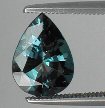
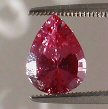
| THE TRADITIONAL BIRTHSTONE for JUNE | |
| The 55th ANNIVERSARY STONE | |
| MOH's scale of hardness : 8-1/2 | Toughness : Excellent |
| Refractive Index : 1.746-1.755 (+.004,-.006) | Specific Gravity : 3.73 (+/- .02) |
| Alexandrite changes color from green in daylight to red in incandescent light. The first time you see it, it is hard to believe your eyes! Alexandrite was first discovered in Czarist Russia, in the Ural mountains, on April 3 1834, when several crystals were found in Tokovanya deposits. The name "Alexandrite" was coined by mineralogist Dr. Nordenskjld (Finnish by birth but he worked for the Russian Czar). Since the old Russian imperial colors were red and green it was named after Czar Alexandr II on the occasion of his coming of age in 1842. Genuine Alexandrite is one of the world's rarest and most coveted Gemstones, it's so rare that most people have never even seen a genuine Top Quality Alexandrite. Alexandrite is in the Chrysoberyl mineral family and is one of the most fascinating gemstones throughout history. Alexandrite is the variety of Chrysoberyl that displays a change-of-color from green to red. A distinct color change is the primary qualification for a Chrysoberyl to be considered alexandrite. Although alexandrite is strongly trichroic, its color change has nothing to do with pleochroism. Instead, like all other color-change gems, it results in a near-equal transmission of the blue-green and red portions of the spectrum, coupled with strong absorption in the yellow. Thus its color is dependant on the spectral strength of the light source. Incandescent light is strongly tilted to the red end, thus causing alexandrite to appear reddish. Daylight, is more equally balanced. Since our eyes are most sensitive to green light, the balance is tipped to the green side. The strength of the color change is related to the difference in the areas of transmission, relative to the absorption in the yellow. The greater the difference, the stronger the color change. The color is actually caused by Chromium. A color change occurs in very few gemstones. For alexandrite, the quality of the color change is paramount. While the holy grail is a gem whose color changes like a traffic light from green to red, such a stone has yet to be found. In fine examples, the change is typically one from a slightly bluish green to a purplish red. The quality of color change is often referred to by dealers in a percentage basis, with 100% change being the ideal. Stones that display a change of 30% or less are of marginal interest and are arguably not even alexandrite. Significant brown or gray components in either of the twin colors will lower value dramatically. The natural color change in Alexandrite ranges from various shades of Green (blue-greens, kelly-greens, olive-greens, teal-greens, etc.) when the gem is under "fluorescent" lighting, or in natural outdoor light "in the shade" (not direct sunlight)... then the color changes to various shades of Red (burgundy-reds, purplish-reds, reddish-purples, violetish-purples, amethyst, etc.) when exposed to light in a room with only incandescent light, tungsten light, or candlelight (a flashlight will bring out the color change too). To get the maximum color change effect the gem is best viewed in a dark room with no outdoor light at all, then turn on a fluorescent light to see the green shade, then turn on a standard incandescent light bulb with the fluorescent light off to see the reddish shade. You can cycle the lights back and forth to see the distinct color change. Alexandrite will normally darken when taken out into direct sunlight, since it is subjected all the colors in the spectrum, also if subjected to several types of lighting sources at the same time the colors may twinkle with both the red and the green color bouncing around different facets in the stone. When the primary color has a bit of brownish in with the green, this is due to the bleeding of the two colors. Typically this is referred to as the percentage of color change. The higher the color change percentage, the more expensive the gem. When the color change from fluorescent light to tungsten light is not an obvious color change from one of the various shades of green to one of the shades of red, the gem is usually called "alexandrite like" or a "color change Chrysoberyl" since it does not quite have the distinct greenish to reddish color change to be called "Alexandrite". In terms of clarity, alexandrite is comparable to ruby, with clean faceted stones in sizes of one carat being rare and sizes over a carat and especially above 2 carats are extremely rare. Negative crystals and parallel rutile silk are common inclusions. Clarity, however, is a minor issue, as long as the inclusions do not affect the stone's durability. The color change is what represents the majority of the gem's value. Color, brilliance, and cut (in that order) are the 3 things that primarily affect the gem's final price. The more vivid the colors of a color change, the more valuable the gemstone. Ideally, you want a dramatic color change with a medium to medium-dark tone and intense color. In the market, Alexandrite is found in a variety of shapes and cutting styles. Ovals are cushions are the most common, but rounds are also seen occasionally, as are a few other shapes. Alexandrite can be found in jewels of the period as it was well loved by the Russian master jewelers. Master gemologist George Kunz of Tiffany was a fan of alexandrite and the company produced many rings featuring fine alexandrite in the late nineteenth and early twentieth century, including some set in platinum from the twenties. Some Victorian jewelry from England features sets of small Alexandrite stones. The original locality for alexandrite is Russia. Russian Alexandrite is extremely rare, the original source in Russia's Ural Mountains has long since dried up after producing for only a few decades. A few Russian miners are still working those trailings there in the Urals, and they are finding a few fine gems, but only in very limited quantities. We secure rare Russian gems from the Cheremsha and Malyshevskaya mines in the Ekaterinburg area of the Ural mountains as soon as they are found and made available to us. Some are small stones, less than a carat, but they all have a dramatic color change. Color change gemstones of Russian origin like this is particularly rare and highly valued by collectors. In 1987, an important new deposit was discovered at the Hematita mine in Nova Era, Brazil. Until this find, Brazil was only known for it's inexpensive gems. The old Hematita mine is still in production, but the new owners are finding it necessary to dig deeper into the mountain. We have access to the finest Alexandrite from these mines. At the present time there are only limited amounts of these goods on the market, and no one knows how much more the mine can produce, but the material presently is of very high quality. This Brazilian Alexandrite shows a striking similarity to the fine Russian gems, having an attractive color change from bluish-green to raspberry like purplish-red. These Brazilian mines have also virtually dried up after producing for only a few years, so they too are also in very limited quantities. These also remain extremely rare and expensive. Since we have have direct access to many of the original stones taken out of the mines we can offer them to you, a few of which are larger stones over a carat. We have also secured some of the finest Alexandrite from Sri Lanka. Many of these fine gems are from the Rakwana area, and they are absolutely stunning, changing from a vibrant bluish-green to a very nice reddish-Purple. We also usually have a few fine specimens from the Ratnapura region. These fine gems have a very good color change also, but it's usually a little more of an olive green changing to a purple stone. Not quite as dramatic as the Russian, Brazilian, and Rakwana material, but very nice indeed. The lower price per carat makes this choice a little more obtainable. The availability this fine material on our website means a new generation has the opportunity to own this beautiful and rare gemstone. Alexandrite stones have also been found in Zimbabwe, Burma, Tanzania, Madagascar, and India. When evaluating alexandrite, pay the most attention to the color change: the more dramatic and complete the shift from red to green, without the bleeding through of brown from one color to the next, the more rare and valuable the stone. The other important value factors are the attractiveness of the two colors - the more intense each color is the better - then look for the clarity, and then the cutting quality. Alexandrite is one of the worlds most expensive gems, with prices similar to those fetched by fine ruby or emerald. But like all gem materials, low-quality (i.e., non-gem quality) pieces may be available for a few dollars per carat. Such stones are generally not clean enough to facet. Because of the rarity of this gemstone, large sizes command very high premiums. Facet-quality alexandrite rough is extremely rare. Thus even the very small stones less than 0.5ct. (melee) can sell for thousands of dollars per carat. Any fine faceted alexandrite around one and a half carats or especially above two carats should be considered quite large. Stones of quality above five carats are extremely rare. We do not sell Synthetics. To assure you that you are getting a genuine Alexandrite from us, we normally provide you with a Gem Identification Report from our in-house gemologist, or a reputable Independent Gem Laboratory. The cost of Independent Gem Reports are included in the price of the gem if the report is listed. Our smaller Alexandrite gems can also come with a "Statement of Sale and Evaluation for Insurance", that includes the specific details on that particular gem as our guarantee of authenticity. Alexandrite is an excellent investment stone since it is definitely considered a "Very Rare" gem. TREATMENTS - Typically Alexandrite is not treated since it would adversely affect the natural color change phenomena. NOTE: While true synthetic alexandrite does exist, the vast majority are actually a synthetic color-change sapphire, colored by vanadium, not synthetic alexandrite. Since synthetic color-change sapphires have been made from about 1909 onwards, it is entirely possible to have a piece that could be classified as an antique. Indeed, many a traveler has returned from a third-world trip with what they think is natural alexandrite, only to later discover (or have their heirs discover) that what they have is a cheap synthetic sapphire worth but a few dollars per carat. If you own a gem that you suspect is an alexandrite, and you are wondering how to tell the difference between synthetic and genuine alexandrite, we recommend you send the stone to a reputable Gem Laboratory and ask for a Gem Identification Report. Please don't call and ask, we can't tell you anything over the phone except that you need to send the stone to a reputable Gem Lab, typically a local Jeweler can't do this. |
|
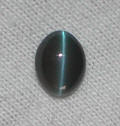
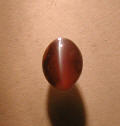
| THE BIRTHSTONE for JUNE | |
| The 55th ANNIVERSARY STONE | |
| MOH's scale of hardness : 8-1/2 | Toughness : Excellent to Good |
| Refractive Index : 1.746-1.755 (+.004,-.006) | Specific Gravity : 3.73 (+/- .02) |
| Alexandrite is very rare, and a Cat's Eye Alexandrite is even more so. Cat's Eye Alexandrite is cut as a Cabochon. The stone is usually translucent with a color change of Green or greenish in sunlight or fluorescent light to Purple or purplish in candlelight or tungsten light. This fine gemstone is usually semi-transparent to semi-translucent and has a strong grayish/bluish
White eye (chatoyancy) which reaches from girdle to girdle. The Cat's Eye is actually caused by fine parallel silk strands in the crystal, and the color
is caused by Chromium. This is a Very Very Rare Gem with a great investment potential!
TREATMENTS - Typically Cat's Eye Alexandrite is not treated since it would adversely affect the natural color change phenomena as well as the chatoyancy. |
|
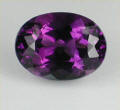
| THE BIRTHSTONE for FEBRUARY | |
| The 6th ANNIVERSARY STONE | |
| MOH's scale of hardness: 7 | Toughness : Good |
| Refractive Index : 1.544-1.553 | Specific Gravity : 2.66 (+.03,-.02) |
|
Amethyst is the most highly valued member of the Quartz mineral family, and it has Purple hues that vary from very pale to dark. The medium-dark to dark tones are considered the most desirable and of course are quite a bit more expensive than the lighter tones. The finest gems usually come from the Elahara mines in Sri Lanka, and the Pau d'Arco mines in Brazil. These fine gemstones are deep dark and rich in color, with all the fire in sparkle you would want to see. Most Amethysts on the market are relatively free of inclusions. TREATMENTS - Typically Amethyst is not
treated. Amethyst that has been heat treated can produce Colorless Quartz, Yellow Citrine, and Madeira Citrine. |
|
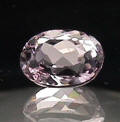
| MOH's scale of hardness: 7 | Toughness : Good |
| Refractive Index : 1.544-1.553 | Specific Gravity : 2.66 (+.03,-.02) |
|
Rose de France Amethyst is also known as Rose Quartz and is available in transparent to translucent light to medium Pinkish-lavender. Titanium oxide is the impurity which creates the Pinkish hue. Much of the faceting material comes from Brazil. Rose de France Amethyst is heat sensitive, excessive heat could turn the stone colorless, or it may produce a Citrine or green color, whereas an abrupt temperature change may fracture the stone. TREATMENTS - Typically Rose de France Amethyst is not treated. |
|
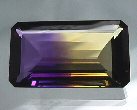
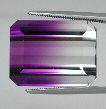
| MOH's scale of hardness : 7 | Toughness : Good |
| Refractive Index : 1.544-1.553 | Specific Gravity : 2.66 (+.03,-.02) |
|
Also called Amethyst/Citrine. Ametrine is a bi-color variety of Quartz, part Violet/Purple Amethyst and part Yellow Citrine or Colorless Quartz with distinct color separation. Ametrine is a natural Gemstone found only in southeastern Bolivia near the border with Brazil. The color distribution in Ametrine can be very distinct with a straight demarcation between the two colors. Ametrine is heat sensitive, excessive heat could turn the stone colorless, or it may produce a bi-color Citrine or bi-color green color, whereas an abrupt temperature change may fracture the stone. Chemicals that could attack this gem are hydrofluoric acids, ammonium fluoride, and alkalies. TREATMENTS - Typically Ametrine is not
treated.
|
|
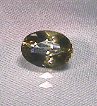
| MOH's scale of hardness : 7-1/2 | Toughness : Fair to Good |
| Refractive Index : 1.634-1.643 (+/-.005) | Specific Gravity : 3.12-3.18 |
|
Also called Poor Man's Alexandrite, but this is a misnomer for a gem that has such strong pleochroism. Andalusite has a faint color change and can look vaguely similar to Alexandrite, it usually varies from light yellowish brown to green-brown, light brownish pink, red-brown to dark-red, grayish green, olive, even violet brown-green, or rarely definite green and has strong pleochroism that makes it hard to identify the main color. Andalusite is a transparent gem that's almost iridescent with an unexceptional vitreous luster. Andalusite is a natural Gemstone found in Andalusia Spain (thus the name), Sri Lanka, Brazil, Quebec Canada, Russia and Maine/Massachusetts USA. Andalusite is normally cut as a faceted mixed oval cut to enhance the luster and strong pleochroism (color change phenomena). The most valuable stones have greenish to reddish pleochroism. Andalusite is not plentiful on the market and is mainly in demand with collectors. Large cuts are rare. TREATMENTS - Typically Andalusite is not treated since it would adversely affect the natural color change phenomena. |
|
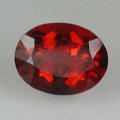
| MOH's scale of hardness : 6-1/2 | Toughness : Fair |
| Refractive Index : 1.551-1.560 | Specific Gravity : 2.67 |
|
Andesine is in the Plagioclase Feldspar mineral group, close to Labradorite. The AGTA, and other well known laboratories, allowed the name Andesine to be given to stones that have less than 50% of Calcium (Albite Na (AISi3O8) and Anorhite (AI2Si3O8)). Copper gives the Red color to Andesine, and the clarity is exceptional. Moonstone and Sunstone are also in the feldspar group, but only fine Red Feldspar can be called Andesine. Andesine is from Oregon USA, also known as "Oregon Sunstone", but to be truly classified Andesine it must have the correct composition as well as it must be Red in color. Anything else would be classified Labradorite, which is found in several colors. The largest known Red Sunstone is 300+ carats. TREATMENTS - Andesine from the Oregon mines right here in the USA is a natural gem, not heated or enhanced in any way. As you can see from the above information, almost all of the other Andesine on the market is artificially dyed red through diffusion treatment. |
|
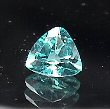
| MOH's scale of hardness : 5 | Toughness : Fair |
| Refractive Index : 1.634-1.638 (+.012,-.006) | Specific Gravity : 3.18 (+/-.05) |
|
Apatite ranges in color from colorless to pink, yellow, green, blue, and violet. It has a vitreous luster and is sensitive to acids. Apatite is very heat sensitive, excessive heat could cause loss or change in color, also chemicals that could attack this gem are sulfuric and hydrochloric acids. Apatite is easily confused with Beryl, Topaz and Tourmaline. TREATMENTS - Typically Apatite is not
treated. |
|
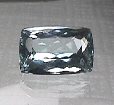
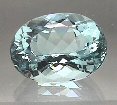
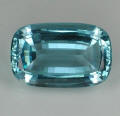
| THE BIRTHSTONE for MARCH | |
| The 19th ANNIVERSARY STONE | |
| MOH's scale of hardness : 7-1/2 to 8 | Toughness : Good |
| Refractive Index : 1.577-1.583 (+/-.017) | Specific Gravity : 2.72 (+.18,-.05) |
|
Aquamarine ranges in color from light to deep greenish-Blue through blue-Green. The richer the color, the more costly the gem is per carat. Aquamarine achieves its Blue
to greenish Blue color from Iron in the ferrous state. Its name is from two Latin words meaning "water" and "sea". Aquamarine amulets were thought to render sailors fearless and protect them from adversities at sea, especially if the stone was engraved with a Poseidon on a chariot. The stone was symbol of happiness and eternal youth, and according to Christian symbolism, it signified moderation and control of the passions to it's owners.
TREATMENTS - Typically Aquamarines are greenish when mined and cut, the sky blue shades are produced by heat treating the greenish-yellow, greenish, and even brownish beryl gems, so you should assume that all of the intense colors of Aquamarine may have been heat treated. The heat treatment process is a permanent process that does not adversely
affect the performance and durability of the gemstone, so there's no need to worry when you see this enhancement disclosed.
|
|

| MOH's scale of hardness : 7-1/2 to 8 | Toughness : Good |
| Refractive Index : 1.577-1.583 (+/-.017) | Specific Gravity : 2.72 (+.18,-.05) |
|
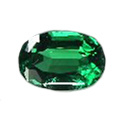
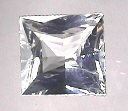
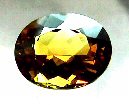
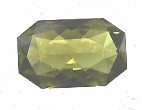
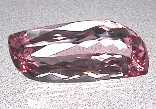
The Beryl mineral family includes Emerald, Aquamarine, Red Beryl (Bixbite), Colorless Beryl (Goshenite), Golden Beryl (Heliodor), Green Beryl, and Morganite. The photos above are in the same order. The Beryl mineral family is a popular one because of the beautiful varieties of colors and the durability of the stones. Beryl is an excellent choice for jewelry. With the exception of Emerald and Red Beryl, all other Beryls are typically clean stones, virtually free of eye visible inclusions. Beryl colors include Colorless, Blue, Green, Yellow, Pink, Peach and Red. Beryl is generally not heat sensitive, but chemicals that could attack this gem are hydrofluoric acids. TREATMENTS - See the individual class
of Beryl for the typical treatment process that may apply. |
|
Red Beryl (Bixbite)
| MOH's scale of hardness : 7-1/2 to 8 | Toughness : Good |
| Refractive Index : 1.577-1.583 (+/-.017) | Specific Gravity : 2.72 (+.18,-.05) |
|
Bixbite is the Red Beryl, extremely rare, probably 100 times more rare than Alexandrite. Typically a strong Ruby Red or slightly violetish Red color, with numerous inclusions and internal flaws. It's pleochroism is comparable to Burma Ruby. Red Beryl is generally not heat sensitive, but chemicals that could attack this gem are hydrofluoric acids. This gem is typically heavily included, opaque, and the faceted Gem is very very expensive. You could expect to pay $20,000 to $25,000 for a one (1) carat Red Beryl. TREATMENTS - Typically Red Beryl is not
treated since it would adversely affect the value. |
|
Colorless Beryl (Goshenite)
| MOH's scale of hardness : 7-1/2 to 8 | Toughness : Good |
| Refractive Index : 1.577-1.583 (+/-.017) | Specific Gravity : 2.72 (+.18,-.05) |
|
Goshenite Beryl is the Colorless Beryl, named after a find in Goshen Massachusetts, which may have a very slight tint of Blue or Silver. This transparent, faceted Gem is an inexpensive choice for jewelry. Colorless Beryl is generally not heat sensitive, but chemicals that could attack this gem are hydrofluoric acids. Goshenite is found in Brazil and the U.S. TREATMENTS - Typically Colorless Beryl is not treated.
|
|
Golden (Heliodor) Beryl
| MOH's scale of hardness : 7-1/2 to 8 | Toughness : Good |
| Refractive Index : 1.577-1.583 (+/-.017) | Specific Gravity : 2.72 (+.18,-.05) |
|
Golden Beryl, or Heliodor, varies between greenish yellow to orangy or yellowish brown. This transparent, faceted Gem is an inexpensive choice for jewelry. Golden Beryl is generally not generally heat sensitive, but the orange could fade or change to pink if subjected to 1000 C or higher. Chemicals that could attack this gem are hydrofluoric acids. Golden Beryl is found in Brazil, Sri Lanka, and Nambia. TREATMENTS - Typically Golden Beryl is not treated.
|
|
Green Beryl
| MOH's scale of hardness : 7-1/2 to 8 | Toughness : Good |
| Refractive Index : 1.577-1.583 (+/-.017) | Specific Gravity : 2.72 (+.18,-.05) |
|
Green Beryl is a green variety whose color is too light, desaturated, or yellowish to be called an Emerald. Green Beryl is generally not generally heat sensitive, but the green could fade or change to a bluish color if subjected to 1000 C or higher. Chemicals that could attack this gem are hydrofluoric acids. Green Beryl can be found in Brazil, Colombia, and Nambia. TREATMENTS - Typically Green Beryl is not treated.
|
|
| MOH's scale of hardness : 8-1/2 | Toughness : Excellent to Good |
| Refractive Index : 1.746-1.755 (+.004,-.006) | Specific Gravity : 3.73 (+/-.02) |
|
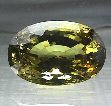
Chrysoberyl has a natural color that ranges from Pale Yellow to Pale Greenish Yellow or Green, or Pale Brownish Yellow. It's color range is like the Chrysoberyl Cat's Eye but a bit more green or brown. The pale yellow color closely resembles Light Yellow Sapphire, but it is not as brilliant. Normally this gemstone is found in Mixed Oval cuts and Round cuts to bring out the excellent luster of the stone, and sometimes it can even be found in Trilliant, Marquis, and Pear cuts. Our main source is Sri Lanka (formerly Ceylon), known for producing some of the finest Gemstones in the world. Other sources for this gemstone are Madagascar and Brazil. The value of Chrysoberyl is about the same as Tourmaline and Spinel. TREATMENTS - Typically Chrysoberyl is
not treated.
|
|
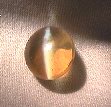
| The 18th ANNIVERSARY STONE | |
| MOH's scale of hardness : 8-1/2 | Toughness : Excellent to Good |
| Refractive Index : 1.746-1.755 (+.004,-.006) | Specific Gravity : 3.73 (+/-.02) |
|
Many Gems have Cat's Eyes, but Chrysoberyl Cat's Eye is the best known. A Cat's Eye stone is a Cabochon which has fine tubes or needles which run across the stone (chatoyancy). When properly cut, the light reflects as a floating silky eye. The sharp eye in the Cabochon resembles the iris of a Cat's Eye, hence the term Cat's Eye. TREATMENTS - Typically Chrysoberyl Cat's
Eye is not treated since it would adversely affect the natural chatoyancy. Chrysoberyl Cat's Eye is often times found to be radioactive, so it must pass the RDX test and have -0- radiation to be imported into the US.
|
|
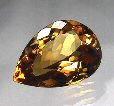
| THE BIRTHSTONE for NOVEMBER | |
| The 13th ANNIVERSARY STONE | |
| MOH's scale of hardness : 7 | Toughness : Good |
| Refractive Index : 1.554-1.553 | Specific Gravity : 2.66 (+.03,-.02) |
|
Citrine, a member of the Quartz mineral family, is a Quartz whose color is probably caused by Iron traces. TREATMENTS -
Almost all Citrine on the market is routinely heat treated. |
|
| THE BIRTHSTONE for MAY | |
| The 20th and 35th ANNIVERSARY STONE | |
| MOH's scale of hardness: 7-1/2 to 8 | Toughness : Poor to Good |
| Refractive Index : 1.577-1.583 (+/-.017) | Specific Gravity : 2.72 (+.18,-.05) |
|
Emerald, the first stones were mined in the deserts of Egypt near the Red Sea in what were known as Cleopatra's Mines. Egyptian Emerald mined today are small and dark stones. Sources for this gemstone are Colombia, Africa, and Brazil. TREATMENTS - Virtually all Emerald on the market has some sort of surface-reaching fractures and openings. The visibility of the inclusions is reduced by filling them. Traditionally, oils (such as cedarwood oil) are used but in time they tend to dry out thus making the inclusion more readily visible again and the gem would require another oil bath. Today, natural resin or wax type materials are preferred over the traditional oils, since the resin or wax is a natural substance with more of an almost permanent treatment life. Emerald enhancement processes date back over 600 years, and oil, natural resin, or wax type treatments are accepted trade practices that do not adversely affect the performance and durability of the gemstone, so you can expect all Emeralds will have some type of enhancement. There's no need to worry when you see these enhancements disclosed.
|
|
| THE BIRTHSTONE for JANUARY | |
| The 2nd ANNIVERSARY STONE | |
| MOH's scale of hardness: 6 to 7-1/2 | Toughness : Fair to Good |
| Refractive Index : see type | Specific Gravity : see type |
|
The Latin root word for Garnet is Granatum, meaning pomegranate, thought to resemble the fruit's seeds. TREATMENTS - Garnet is not treated.
|
|
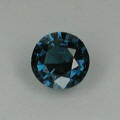
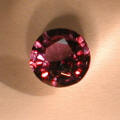
| MOH's scale of hardness: 7 to 7-1/2 | Toughness : Fair to Good |
| Refractive Index : 1.760 (+.020,-.018) | Specific Gravity : 3.78-3.85 |
|
Color Change Garnet is very scarce, with very few stones in the worldwide market. These Garnets are a rare mixture of Pyrope and Spessartite, but also have Chromium and Vanadium, which gives it the color change. They have a wide variability in color behavior. The lesser quality stones can vary in shades of drab brownish colors, whereas the top gem quality stones can be vivid purples and vivid blue-greens in daylight or fluorescent lighting to purplish-Reds and Blood Reds in candle light or incandescent lighting, in the top quality stones, blue hues are very rare. Top Gem Color Change Garnet can be easily confused with top quality Alexandrite, the color shift can be that dramatic. Typically Color Change Garnet stones are faceted and range in sizes between 1 to 10 carats. Some of the identifying characteristics are rutile, pyrite, and apatite crystals visible in the stone. Color Change Garnet is heat sensitive, excessive heat could cause fracturing. Chemicals that could attack this gem are hydrofluoric acids. Color Change Garnets are found in Sri Lanka, Africa, and Brazil. Expect the extraordinary stones to continue to increase in value, since they a very highly valued Collectors Gemstone. TREATMENTS - Garnet is not treated.
|
|
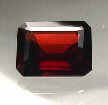
| MOH's scale of hardness: 7 to 7-1/2 | Toughness : Fair to Good |
| Refractive Index : 1.714-1.742 | Specific Gravity : 3.78 (+.09,-.16) |
|
Pyrope (PYE-rope) Garnets are the most common on the market. They are typically Red with a brownish tint, or Brick Red in color. Pyrope is sometimes called Cape Ruby, but this is a misnomer, and sometimes confused with Almondine and Spinel. Pyrope Garnets are seldom over 2 carats, can be found in faceted as well as cabochon cut stones, they are tough wearing stones, so an excellent choice for jewelry. Pyrope Garnet is heat sensitive, the stone fuses easily before a jewelers torch, and abrupt temperature changes could cause fracturing. Chemicals that could attack this gem are hydrofluoric acids. TREATMENTS - Garnet is typically not treated.
|
|
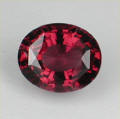
| MOH's scale of hardness: 7 to 7-1/2 | Toughness : Fair to Good |
| Refractive Index : 1.760 (+.010 -.020) | Specific Gravity : 3.84 (+/-.010) |
|
Rhodolite (ROE-doe-lite) is the name used to describe the lovely pinkish, purplish or lavender Red Garnets which are a mixture of Pyrope and Almandite. This name was first used in the late 1800's to describe the new rhododendron shade of Garnets discovered in North Carolina. Rhodolite is usually a Red stone, ranging from light to dark purplish Red through reddish Purple. Raspberry Rhodolite (trade name) is a rich purplish Red with bright Lavender highlights. Prices are based on the color, size and clarity of the stone. Rhodolite Garnets are not as dark as the common Pyrope Garnets. Rhodolite is heat sensitive, the stone fuses easily before a jewelers torch, and abrupt temperature changes could cause fracturing. Chemicals that could attack this gem are hydrofluoric acids. Rhodolite garnets are normally Sri Lankan or African in origin and are bright, transparent Gems. TREATMENTS - Garnet are not normally treated.
|
|
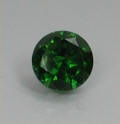
| MOH's scale of hardness: 6-1/2 to 7 | Toughness : Fair to Good |
| Refractive Index : 1.888 (+.007, -.033) | Specific Gravity : 3.84 (+/-.03) |
|
Green Demantoid Garnet, in the Andradite (ANN-druh-dite) mineral species belonging to the Garnet group, is one of the rarest Garnets. Discovered in Russia in 1868, the supply was consumed in jewelry by 1896. Production now is limited to a few stones a year. Utilized in Art Nouveau jewelry during the turn of the century. Demantoid is important to Gem aficionados for four reasons: its great rarity, its color, its high dispersion and its distinctive inclusion. Dispersion, or the breaking of White light into spectral colors, is measured at 0.044 for Diamond and 0.057 for Demantoid. Demantoid's name means "diamond" in German, an indication of its beautiful luster. Demantoid deposits of lesser material exist in San Bonito County, California, the Piedmont area of Italy, Iran, Nambia, Korea, the Congo and the Stanley Butts area of Arizona, but because the original locality for demantoid was in Russia?s Ural Mountains, the Russian material remains the standard by which the gem is judged. While the color of demantoid never equals that of the finest emerald, an emerald-green is the ideal. The color should be as intense as possible, without being overly dark. Many stones are in the yellowish-Green range with lesser qualities being brownish Green of grayish Green. The color of demantoid is believed to be due to chromium. It should be noted that the fire in a demantoid is best seen in the lighter, less saturated gems. Thus color preference is a matter of individual taste. Some people will choose an intense body color and less fire, while others prefer a lighter body color and more fire. Demantoid garnet generally looks best under daylight. Incandescent light makes it appear slightly more yellowish-green. Because of its high dispersion, demantoid looks great in the same type of lighting as diamond, i.e., ulti-point (as opposed to diffuse) lighting. Demantoid is relatively clean, thus when buying one you should look for an eye-clean or near-eye-clean stone. Demantoids exhibit a unique Byssolite inclusion called a "horse tail." This inclusion is formed by Asbestos, needle-like fibers which radiate from a central crystal, usually Chrysolite, in a curving style similar to a horse's tail. Gem cutters often fashion a Demantoid to better show the inclusion since this is a definite characteristic of a Demantoid. Generally you will only find round brilliant, oval, or cushion cuts. Typically crystals are small and not plentiful, generally under 1 Carat. Demantoid is rare in faceted stones above 2 carats. Fine demantoids above 5 carats can be considered world-class pieces. Demantoid is among the most expensive of all garnets, but like all gem materials, low-quality (i.e., non-gem quality) ieces may be available for a few dollars per carat. Prices for demantoid vary greatly according to size and quality, but gem quality stones with no enhancement may reach as much as $10,000 per carat. Demantoid is heat sensitive, an abrupt temperature changes could cause fracturing. Chemicals that could attack this gem are hydrofluoric acids.. Demantoid Garnet is a valued Collectors Gemstone. TREATMENTS - Some Demantoid Garnet on the market is heat-treated to improve the color, and the resulting stones are stable under normal wearing conditions, however any type of enhancement will reduce the value and should affect your buying decision. Most Demantoid Garnet on the market is not treated.
|
|
Grossularite Garnet
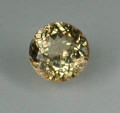
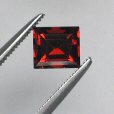
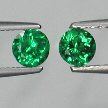
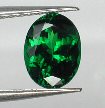
| THE ALTERNATE BIRTHSTONE for MAY | |
| MOH's scale of hardness: 7 to 7-1/2 | Toughness : Fair to Good |
| Refractive Index : 1.740 (+.020 -.010) | Specific Gravity : 3.61 (+.12, -.04) |
|
The Grossularite (GRAHSS-you-lar-ite) Garnet mineral species belonging to the Garnet group incorporates many colors: light to dark Yellow to reddish Orange (Hessonite), light to dark Green (Tsavorite), Colorless (rare); and occasionally translucent to opaque Pink. Of course there are many variations and shades of these colors. Pure Grossularite is Colorless. Grossularite Garnets can have a particular inclusion which is an identifying characteristic. A treacle or swirly appearance created by tiny included crystals, generally Diopside crystals, is common to Grossularite Garnets. Grossularite Garnet is heat sensitive, abrupt temperature changes could cause fracturing. Chemicals that could attack this gem are hydrofluoric acids. Sources for Grossularite Garnet are Sri Lanka, Canada, U.S., Mexico, Africa, Australia and Brazil. Grossular Garnets are valued Collectors Gemstones. TREATMENTS - Grossularite Garnet is not normally treated.
|
|
| MOH's scale of hardness: 7 to 7-1/2 | Toughness : Fair to Good |
| Refractive Index : 1.740 (+.020 -.010) | Specific Gravity : 3.61 (+.12, -.04) |
|
Hessonite is part of the Grossularite Garnet species. Hessonite Garnets are available in light to dark Yellow to reddish Orange. The Red/Orange Hessonite is often referred to as "Cinnamon" stone because it matches the color of oil of cinnamon produced in Ceylon. Our source for Hessonite Garnet is Sri Lanka (formerly Ceylon), known for producing the finest variety of Garnet. Other sources are Canada, Mexico, U.S., Brazil and Africa. Hessonite Garnet is a valued Collectors Gemstone. TREATMENTS - Hessonite Garnet is not normally treated. |
|
| MOH's scale of hardness: 7 to 7-1/2 | Toughness : Fair to Good |
| Refractive Index : 1.740 (+.020 -.010) | Specific Gravity : 3.61 (+.12, -.04) |
|
Tsavorite is the intense Green Grossular Garnet named after the Tsavo National Park in Kenya. Tsavorite was first discovered in 1967 and was named by Henry B. Platt, vice-president of Tiffany & Co., after the site of that find. Tsavorite is often compared to other Green Gemstones, and it is easily a match for the better known Emerald. Actually Tsavorite is superior to the Emerald in many ways, and it is a rarer stone. Tsavorite is a tougher, more durable stone with a higher luster, resulting in a higher polish. It also has a higher refractive index, 1.74 for Tsavorite compared to 1.57 for Emerald, so Tsavorite is the brighter stone for setting with Diamonds since the Tsavorite will display more sparkle and fire. Shades vary from pure Green to yellowish Green. Like Emerald, most Tsavorite can have some visible inclusions. Most Tsavorite production is under 1 Carat. A 2 Carat Tsavorite is considered large! Tsavorite a is a valued Collectors Gemstone due to its rarity and its beauty. TREATMENTS - Tsavorite Garnet is typically not normally treated.
|
|
Mali Garnet
| MOH's scale of hardness: 7 to 7-1/2 | Toughness : Fair to Good |
| Refractive Index : 1.740 (+.020 -.010) | Specific Gravity : 3.61 (+.12, -.04) |
|
One of the latest discoveries in the Garnet family. From Mali, Africa, these attractive Garnets are a rare mixture of Andradite and Grossular and only came into the market in late 1994. Mali Garnets are much rarer than Tsavorite Garnets. All are a bright, uniform light yellowish Green. These are extraordinary stones that are expected to increase in value. TREATMENTS - Mali Garnet is not normally treated.
|
|
| MOH's scale of hardness: 7 to 7-1/2 | Toughness : Fair to Good |
| Refractive Index : 1.810 (+.004, -.020) | Specific Gravity : 4.15 (+.05, -.03) |
|
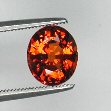
Spessartite (SPESS-ar-tite) Garnets are not commonly found on the market, they can be found in yellowish-Orange to reddish-Orange. Most people do not realize garnets come in colors besides Red. The vivid Orange color, sometimes with a Orange-Red to Orange-Pink color, is the most desired. This Gem is especially Rare in clean faceted stones larger than 3 carats, and Gems over 10 carats are extremely Rare. The labor involved is arduous because the crystals are buried in pockets in pegmatites, once molten lava, and the miner slowly moves from pocket to pocket to retrieve the crystals. Spessartite has good transparency, considerable luster, and normally found in Mixed or Oval cuts. This Gem received its name from the area in Spessart, Germany, where it was originally found in the 1800's. Since all Garnets are tough wearing stones, Spessartite is an excellent choice for jewelry. Spessartite Garnet is heat sensitive, abrupt temperature changes could cause fracturing. Chemicals that could attack this gem are hydrofluoric acids. TREATMENTS - Spessartite Garnet is not normally treated.
|
|
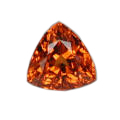
| MOH's scale of hardness: 6 to 6-1/2 | Toughness : Fair |
| Refractive Index : 1.810 (+.004, -.020) | Specific Gravity : 4.15 (+.05, -.03) |
|
Mandarin Garnet is part of the Spessartite Garnet species. It is a beautiful "Sunkist" Orange color, and a little softer than the other Garnets with a hardness of 6 to 6-1/2. This Garnet is fairly new to the Gem Market, being discovered in 1992 in Namibia near the north border with Angola. Mandarin Garnet is mined in wasteland conditions. Temperatures have been known to reach 1400F in a desert area populated by Angolan soldiers who have fled their homeland. Mandarin is uniform, and has vivid color of pure Orange that sets it apart from other Orange stones. Mandarin Garnet is heat sensitive, excessive heat could cause fracturing. Chemicals that could attack this gem are hydrofluoric acids. Mandarin Garnets take a good polish, so this is a beautiful Gem for mounting. Potential for this Gem is good because jewelry demand will grow due to its vivid color and brightness. TREATMENTS - Mandarin Garnet is not usually treated.
|
|
Malaia (Malaya) Garnet
| MOH's scale of hardness: 7 to 7-1/2 | Toughness : Fair to Good |
| Refractive Index : 1.760 (+.020,-.018) | Specific Gravity : 3.78-3.85 |
|
Malaia (muh-LYE-uh) Garnet (also called Malaya Garnet) are a rare mixture of Pyrope and Spessartite Garnet family. These Garnets were discovered in the Umba Valley in Tanzania, Africa. This Garnet has an unusual history. In the late 1970's, East African miners included this Orange and reddish Orange stone in parcels of Rhodolite Garnet being offered to Japanese dealers. The "off" colors, summarily rejected for their obviously different color, were contemptuously called Malaya by the miners. This Swahili word means outcast or prostitute. German and American dealers saw the beauty of this "outcast" Gem and began marketing Malaya Garnet in 1979. They generally range in color from a slightly pinkish-orange or reddish-orange or yellowish-orange, and tones from light to dark. These extraordinary stones are expected to increase in value. Top color Malaya Garnets are pure orange or reddish-orange, sometimes with a touch of peach. These vibrant stones are beautiful especially when mounted in Jewelry. Malaia Garnet is heat sensitive, excessive heat could cause fracturing. Chemicals that could attack this gem are hydrofluoric acids. Malaia Garnets are very limited on the market. TREATMENTS - Malaia Garnet is not treated.
|
|
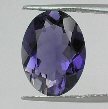
| THE ALTERNATE BIRTHSTONE for SEPTEMBER | |
| The 21st ANNIVERSARY STONE | |
| MOH's scale of hardness: 7 to 7-1/2 | Toughness : Fair |
| Refractive Index : 1.542-1.551 (+.045,-.011) | Specific Gravity : 2.61 (+/-.05) |
|
Iolite is also called Dichroite, referring to it's strong pleochroism, and Cordierite by minerologists, but the term Water Sapphire is a misnomer. Iolite varies from violetishBlue through slightly voiletish Blue, and it always has a strong pleochroism. Iolite is heat sensitive, the stone fuses easily before a jewelers torch, abrupt temperature changes could cause fracturing. Chemicals that could attack this gem are acids. This Gems are usually just a few carats in size, so to find anything over 3 carats in a rare find indeed. Iolite is cut to maximize the color and pleochroism. Iolite is often confused with Sapphire and Tanzanite. These vitreous, transparent, faceted stones are found in Sri Lanka, Brazil, India, Tanzania, Burma, Finland, Madagascar, Nambia, and Norway. The most common cut to be found is Oval or Rectangular step cut. TREATMENTS - Typically Iolite is not treated.
|
|
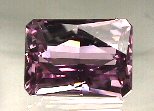
| MOH's scale of hardness: 6-1/2 to 7 | Toughness : Poor |
| Refractive Index : 1.660-1.676 (+/-.005) | Specific Gravity : 3.18 (+/-.03) |
|
Kunzite is in the best known member of the Spodumene (SPOD-you-mene) mineral species. The actual trade name Kunzite was named after George F. Kunz, the noted Gemologist for Tiffany & Company, in 1902. This Pink to bluish Purple gem is frequently encountered in very large sizes and in deep cut Gems as a way of maximizing the color. Smaller stones, those under 10 Carats, will usually have lighter color than larger ones. Kunzite is heat sensitive, abrupt temperature changes could cause fracturing. Kunzite can also fade when exposed to strong light for extended periods, so caution should be exercised regarding a lot of exposure to sunlight. TREATMENTS - The very nature of Kunzite requires it's color to be enhanced and stabilized by Irradiation followed by Heat treatment. |
|
| THE PINK EMERALD | |
| THE ALTERNATE BIRTHSTONE for OCTOBER | |
| MOH's scale of hardness: 7-1/2 to 8 | Toughness : Good |
| Refractive Index : 1.577-1.583 (+/-.017) | Specific Gravity : 2.72 (+.18-.05) |
|
Morganite is in the Beryl (BARE-ul) mineral species. The public was just beginning to gain awareness of this soft pink stone named after J.P. Morgan (Morganite) but is now gaining recognition by a new name "Pink Emerald". This reddish Orange through slightly purplish Red gem is truly rare, especially in the larger sizes with good color. In reality, green emerald is not rare, diamond is anything but rare, since everyone in the world has one, regardless of their income level, but Morganite is very rare. Gem dealers in the know have one tucked away because they've always thought it would be an important gemstone. Pink Emerald is finally receiving the appreciation and price level it deserves. Pink Emerald prices are now at around $450 per carat for some of the smaller stones (<3
carats) in lighter colors, and range to upwards of $10,000 per carat for large stones with rich color. Some dealers see Morganite as easily being $10,000
to $30,000 per carat in the very near future. Morganite, or Pink Emeralds are following the lead taken in 1990 when red beryl, or bixbite, was being sold and marketed as Red Emerald. Red Emerald and Pink Emerald are both beryllium aluminum silicates colored by manganese and chromium, among other things. These precious gems are extremely desirable and beautiful. As with most gems, the larger the Pink Emerald the more it's cost per carat, and the more saturated the color, the higher the price of the gemstone. A clean and well cut Pink Emerald (Morganite) with moderate to moderately strong pastel pink color is definitely a winner, a gem you'd be proud to own, but to maintain it properly, make sure you clean it often, following the instructions below. Morganite is one of my personal favorites. This is a valued Collectors Gemstone that will continue to gain popularity and increase in value. TREATMENTS - Typically Morganite is not treated or enhanced.
|
|
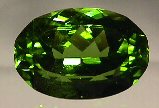
| THE BIRTHSTONE for AUGUST | |
| The 16th ANNIVERSARY STONE | |
| MOH's scale of hardness: 6-1/2 to 7 | Toughness : Fair to Good |
| Refractive Index : 1.654-1.690 (+/-.020) | Specific Gravity : 3.34 (+.14,-.07) |
|
Peridot (PEAR-ih-doe) belongs to the forsterite-fayalite mineral series, which is part of the olivine group. The name is derived from the Greek word peridona, meaning to provide plentifully. Peridot ranges in color from yellowish Green to greenish Yellow. Because of the way Peridot splits and bends the rays of light passing through it, it has a velvety, "sleepy" appearance and a shining rich glow. The amount of Iron determines the color saturation. TREATMENTS - Typically Peridot is not treated or enhanced.
|
|
| MOH's scale of hardness : 7-1/2 to 8 | Toughness : Good |
| Refractive Index : 1.66 | Specific Gravity : 2.96 |
|
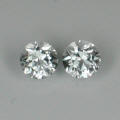
Pehenakite (Phenacite) is a rare beryllium mineral found in the Emerald and Alexandrite mining areas on the Takovaya stream, near Ekaterinburg in the Urals of Russia. It was named in 1833 by Nordenskiold from the Greek for "deceiver" or "liar" because it is so similar in appearance to a diamond. The crystals are sometimes perfectly colorless and transparent, but more often they are greyish or yellowish and only translucent; occasionally they are pale rose-red. In general appearance the mineral is not unlike quartz, for which indeed it has been mistaken. For gem purposes the stone is cut in the brilliant form. The indices of refraction are higher than those of quartz, beryl or topaz; a faceted phenacite is consequently rather brilliant and may sometimes be mistaken for diamond. Pehenakite is an excellent choice to add to your Collection of Gemstones. TREATMENTS - Pehenakite is not treated or enhanced. |
|
| MOH's scale of hardness : 5-1/2 to 6-1/2 | Toughness : Fair to Good |
| Refractive Index : 1.43 - 1.47 | Specific Gravity : 1.98 - 2.25 |
|
OPAL derives from the Sanskrit Upala and the Latin opalus, meaning "precious stone". The oldest Opal mine was at Czerwenitza, now in Czechoslovakia (formerly Hungary). Archival evidence indicates that the mine was worked in the 14th century, but there are indications that it was in operation much earlier, perhaps the source of opal for Rome. Production of semi translucent milky white stones with play of color continued until 1932. Mexican Fire Opal was known to the Aztecs and was introduced in Europe by the Spanish conquistadors early in the 16th century.
The characteristic feature of gem Opal is play of colors, pure colors can be seen in rapid succession when the gem is moved around. TREATMENTS - Opal is not treated or enhanced, but it is made into a doublet or triplet as explained above. Glass and Plastic have been used to imitate Opal, but it is very poor looking material. No natural mineral resembles Opal, with the possible exception of Labradorite Feldspar. Synthetic Opal was commercially produced France in 1972, but it's cost is almost the same as natural opal, so why would anyone even remotely consider purchasing the synthetic material.
|
|
| THE BIRTHSTONE for JULY | |
| The 15th and 40th ANNIVERSARY STONE | |
| The 80th ANNIVERSARY STONE | |
| MOH's scale of hardness : 9; | Toughness : Excellent |
| Refractive Index : 1.762-1.770 (+.009, -.005) | Specific Gravity : 4.00 (+/-.05) |
|
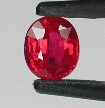
Ruby is one of the symbols of love.
TREATMENTS - Over 99% of all Ruby on the market is heat treated, to stabilize and/or enhance the color and/or clarity. The typical heat treatment process is a permanent process that does not adversely affect the performance and durability of the gemstone, so there's no need to worry when you see this enhancement disclosed. The typical heat enhancement procedure performed on Ruby from Sri Lanka (Ceylon) normally refers to the lower temperature wood 'blow' heat method, whereas and the typical heat enhancement procedure performed on Mogok, Myanmar, MongHsu, Thai, Vietnamese, and African Ruby usually refers to the high temperature furnace fired method. Both heating methods are accepted trade practices, and have been for many generations. The heat treatment process is permanent and does not adversely affect the performance, and durability of the gem, but in recent years demand for natural non-heated non-treated top quality Ruby has caused these gems to command a somewhat higher premium, depending on the gem. We take pride in finding and featuring many of these non-heated natural Rubies. |
|
| THE BIRTHSTONE for JULY | |
| The 15th and 40th ANNIVERSARY STONE | |
| The 80th ANNIVERSARY STONE | |
| MOH's scale of hardnes s: 9 | Toughness : Excellent |
| Refractive Index : 1.762-1.770 (+.009, -.005) | Specific Gravity : 4.00 (+.10,-.05) |
|
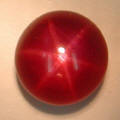
Ruby sometimes displays a three-ray, six-point star. These star rubies are cut in a smooth domed cabochon cut to display the effect. The star is best visible when illuminated with a single light source: it moves across the stone as the light moves. This effect, called asterism, is caused by light reflecting off tiny needle like rutile (called "silk") arranged in three sets of parallel needles that intersect one another at 60o angles. TREATMENTS - Genuine Star Ruby is not typically treated with 'heat' or any other treatment to enhance the color or alter the clarity. If a Star Ruby were to be heated the person doing the heating seriously risks dissolving the rutile needles that cause the asterism to form a star, thus rendering it a plain Cabochon Ruby worth far less than it is as a natural non-heated non-treated Top Quality Star Ruby.
The following links are to reputable Gem Laboratories and Appraisers (in Alphabetical order).
|
|
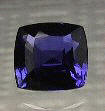
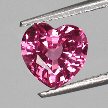
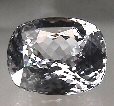
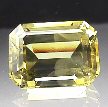
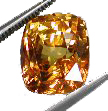
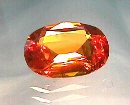
| THE BIRTHSTONE for SEPTEMBER (Blue) | |
| ALTERNATE BIRTHSTONE for APRIL (White) | |
| ALTERNATE BIRTHSTONE for OCTOBER (Pink) | |
| ALTERNATE BIRTHSTONE for NOVEMBER (Yellow) | |
| The 5th and 45th ANNIVERSARY STONE | |
| The 70th ANNIVERSARY JUBILEE STONE | |
| MOH's scale of hardness : 9 | Toughness : Excellent |
| Refractive Index : 1.762-1.770 (+.009,-.005) | Specific Gravity : 4.00 (+.10,-.05) |
|
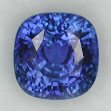
Sapphire and Ruby comprise more than half of all Gemstones sold worldwide. Sapphire's popularity is not based on color alone. Its hardness of 9 places it next to Diamond (10), making it an excellent choice for jewelry worn daily. It is frequently featured in engagement rings.
Most people relate Sapphire to the color Blue. Sapphire is a form of Corundum (ko-RUN-dum), readily available in an array of other colors: Pink, Golden, Green, peachy Orange, Purple, Yellow, and Colorless. These alternate colors are called 'Fancy Sapphire', or simply variations of the standard hues. Color change Sapphires are those which have two colors which are distinct when the light source is changed from fluorescent to incandescent. Generally, the more clear and vivid the color, the more valuable the fancy sapphire. If the color is in the pastel range, the clarity should be good: because in lighter tones any inclusions are more noticeable. The trade usually recognizes gemstones with fewer visible inclusions to be more valuable than gems with visible inclusions. In a lighter colored gemstone, the cut is also more important: it should reflect light back evenly across the face of the stone, making it lively and brilliant. With darker more intense colors, the cut isn't as critical because the color creates its own impact. TREATMENTS - Approx. 99% of all Sapphire on the market is routinely treated with 'heat' to enhance and stabilize the color. The typical heat treatment process is a permanent process and it does not normally adversely affect the performance, and durability of the gem, but in recent years demand for natural non-heated non-treated top quality Sapphire has caused these gems to command a somewhat higher premium, depending on the gem. When we disclose a gem as enhanced with 'heat', we are typically referring to the heat enhancement procedure performed in Sri Lanka right near the mines, using the lower temperature wood heat method. This 'blow' heat method typically is used on very very good quality Ceylon gems, only to slightly enhance the color and/or to stabilize the color from fading in sunlight. There's no need to worry when you see this enhancement disclosed. Almost all Ceylon Padparadscha Sapphire and virtually all Ceylon Orange Sapphire on the market was subjected to 'blow' heat. This 'blow' heating method has been an accepted trade practice for many many generations. There are other types of heat enhancement procedures, however, one of which is a high temperature furnace fired method. This 'furnace' process is typically performed on Sapphire of a much lesser quality.The goal is to seriously enhance or alter the color and/or clarity of the stone. Most of these gemstones are highly heated, almost to the melting point of the gem, so it is 'cooked' over and over until the gem dealers feel it is a more desirable color and will fetch a better price in the market. We normally do not offer gemstones that have been highly heated. CAVEAT EMPTOR - A new type heat enhancement was introduced recently, called 'bulk diffusion', which means the gem is subjected to the high temperature furnace fired method above 1900o C, and also under high pressure, then a coloring agent is added to the mix to alter and/or change the color of the gemstone. AGTA and GIA gem labs, after examination of this 'bulk diffused' heat treatment process reveals that the color does not go all the way through the gem, but is only in the outer layer, so if the stone is ever scratched or recut the outside color layer would be removed and the original color would then be visible under the outer layer of the gem. These 'bulk diffusion' factories are usually at locations in Thailand, and since Asian gem suppliers (and there are many online now) are not subject to the same disclosure laws as we are here in the US, these enhancement processes are rarely disclosed to the buyer, so buyers please beware. For example, you may see a premium Ceylon Sapphire advertised on one of those websites for what appears to be pennies on the dollar. You can rest assured this is most likely a diffused stone altered by one of the Asian factories. Some of these gem suppliers even go to great lengths to try to convince the public that there is no difference in the value of their diffused gems, and the value of a natural non-treated gem, but any experienced jeweler will verify that a statement like that is totally untrue. We specialize in obtaining top quality Ceylon Sapphires that are natural "non-treated" gems, not heated or chemically treated in any way (the exception is Padparadscha, Golden, Orange, and some of the darker shades of Blue Sapphire, which as stated in treatments above are typically 'blow' heat enhanced to stabilize the color. CARE - It is usually safe to clean Sapphire in an UltraSonic Cleaner, and generally safe to use a steamer. The best practice is to use an Ionic Cleaner and/or warm soapy water and a soft brush as the best way to clean your Sapphire Jewelry. |
|
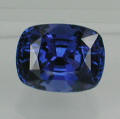
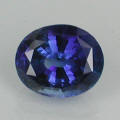
| THE BIRTHSTONE for SEPTEMBER (Blue) | |
| MOH's scale of hardness : 9 | Toughness : Excellent |
| Refractive Index : 1.762-1.770 (+.009,-.005) | Specific Gravity : 4.00 (+.10,-.05) |
|
Sapphire and Ruby comprise more than half of all Gemstones sold worldwide. Sapphire's popularity is not based on color alone. Its hardness of 9 places it next to Diamond (10), making it an excellent choice for jewelry worn daily. Blue Sapphire is frequently featured on engagement rings. Most people relate Sapphire to the color Blue. Sapphire is in the Corundum (ko-RUN-dum) mineral family. Although everyone has heard of the fabled Burmese Kashmir Sapphire, few have ever seen one. We constantly see appraisals that refer to Kashmir Sapphire (or Cashmere Sapphire), but it is usually referring to a Top Gem Ceylon Sapphire from Sri Lanka. The term Kashmir is widely regarded to mean the finest quality Blue Sapphire with a velvety, slightly violetish blue, highly saturated in medium to medium dark tone, with sleepy transparency. Once in a great while we are able to acquire one from Burma, but since the mine has been depleted and these highly prized stones are old stones that are simply brought back onto the market, they don't last long. Authentic Kashmir Sapphires and the Kashmir color Sapphires carry a particularly high cost per carat and are very highly valued Collectors Gemstones. TREATMENTS - Almost all (99%) Sapphire on the market is routinely treated with 'heat' to enhance and stabilize the color. The typical heat treatment process is a permanent process and it does not normally adversely affect the performance, and durability of the gem, but in recent years demand for natural non-heated non-treated top quality Sapphire has caused these gems to command a somewhat higher premium, depending on the gem. When we disclose a gem as enhanced with 'heat', we are typically referring to the heat enhancement procedure performed in Sri Lanka right near the mines, using the lower temperature wood heat method. This 'blow' heat method typically is used on very very good quality Ceylon gems, only to slightly enhance the color and/or to stabilize the color from fading in sunlight. There's no need to worry when you see this enhancement disclosed. Almost all Ceylon Padparadscha Sapphire and virtually all Ceylon Orange Sapphire on the market was subjected to 'blow' heat. This 'blow' heating method has been an accepted trade practice for many many generations. There are other types of heat enhancement procedures, however, one of which is a high temperature furnace fired method. This 'furnace' process is typically performed on Sapphire of a much lesser quality. The goal is to seriously enhance or alter the color and/or clarity of the stone. Most of these gemstones are highly heated, almost to the melting point of the gem, so it is cooked over and over until the gem dealers feel it is a more desirable color and will fetch a better price in the market. We normally do not offer gemstones that have been highly heated. CAVEAT EMPTOR - A new type heat enhancement was introduced recently, called 'bulk diffusion', which means the gem is subjected to the high temperature furnace fired method above 1900o C, and also under high pressure, then a coloring agent is added to the mix to alter and/or change the color of the gemstone. AGTA and GIA gem labs, after examination of this 'bulk diffused' heat treatment process reveals that the color does not go all the way through the gem, but is only in the outer layer, so if the stone is ever scratched or recut the outside color layer would be removed and the original color would then be visible under the outer layer of the gem. These 'bulk diffusion' factories are usually at locations in Thailand, and since Asian gem suppliers (and there are many online now) are not subject to the same disclosure laws as we are here in the US, these enhancement processes are rarely disclosed to the buyer, so buyers please beware. For example, you may see a premium Ceylon Sapphire advertised on one of those websites for what appears to be pennies on the dollar. You can rest assured this is most likely a diffused stone altered by one of the Asian factories. Some of these gem suppliers even go to great lengths to try to convince the public that there is no difference in the value of their diffused gems, and the value of a natural non-treated gem, but any experienced jeweler will verify that a statement like that is totally untrue. We specialize in obtaining top quality Ceylon Sapphires that are natural "non-treated" gems, not heated or chemically treated in any way (the exception is Padparadscha, Golden, Orange, and some of the darker shades of Blue Sapphire, which as stated in treatments above are typically 'blow' heat enhanced to stabilize the color. CARE - It is usually safe to clean Sapphire in an UltraSonic Cleaner, and generally safe to use a steamer. The best practice is to use an Ionic Cleaner and/or warm soapy water and a soft brush as the best way to clean your Sapphire Jewelry. |
|
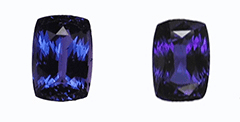
| MOH's scale of hardness : 9 | Toughness : Excellent |
| Refractive Index : 1.762-1.770 (+.009,-.005) | Specific Gravity : 4.00 (+.10,-.05) |
A color change Gemstone is one that changes from one color to another due to a change in the light source. The color change can be a subtle change in hue, to a dramatic blue to purple color change. The color change comes about in a Gemstone due to the atomic structure of the stone. The ultraviolet rays in sunlight or fluorescent light excite the atoms in a color change Gem, but artificial (incandescent) light does not. Sapphire is one of the few Gemstones that can have a color change. The more dramatic the color change, the rarer and more expensive the stone. Color Change Sapphire is very difficult to find, especially in larger sizes. No matter what size the stone, these Sapphires are considered to be rare. The largest Color Change Sapphire I have seen was a little over 25 carats, but this was many years ago, during the past five years the largest I have found was just under 8 carats. Color Change Sapphire is a phenomenon gemstone, similar to Alexandrite, and is sometimes even found as Color Change Star Sapphire, which is even more of a phenomenon gemstone than a faceted gem. TREATMENTS - Color Change Sapphire is not typically treated with 'heat' or any other treatment to enhance the color or alter the clarity. If a Color Change Sapphire were to be heated it would alter the color changing properties within the gem, thus rendering it worth far less than it is as a natural non-heated non-treated top quality Color Changing Sapphire. |
| MOH's scale of hardness: 9 | Toughness : Excellent |
| Refractive Index : 1.762-1.770 (+.009,-.005) | Specific Gravity : 4.00 (+.10,-.05) |
These Sapphires are generally a strong, bright green color, sometimes from green to bluish green or yellowish green pleochroism. They are not the same tone of Green as the Chrome Tourmaline, Tsavorite Garnet, or Emerald, but can at first glance look very similar. The mixed Oval and Cushion cut are the most common, but you can sometimes find square or rectangular step cuts. Green Sapphires are not very popular for mounting in jewelry but make nice additions to any Collection. TREATMENTS - (see
above). |
| Pink Sapphire Information | |
| ALTERNATE BIRTHSTONE for OCTOBER (Pink) | |
| MOH's scale of hardness: 9 | Toughness : Excellent |
| Refractive Index : 1.762-1.770 (+.009,-.005) | Specific Gravity : 4.00 (+.10,-.05) |
Pink Sapphires are one of the HOTTEST of the fancy color Sapphires. There is a wide variance in color, from Light Pink similar to the Fancy Pink Diamond color, to very Hot Pinks similar to the Fancy Vivid Pink Diamond color. Light Pinks are very very hard to find, customarily the medium pinks are the most commonly found. Light pinks have become extremely popular, since they are so close to the color of a Fancy Pink Diamond, and a few Hollywood celebrities have been seen wearing them. TREATMENTS - Almost all (99%) Sapphire on the market is routinely treated with 'heat' to enhance and stabilize the color. The typical heat treatment process is a permanent process and it does not normally adversely affect the performance, and durability of the gem, but in recent years demand for natural non-heated non-treated top quality Sapphire has caused these gems to command a somewhat higher premium, depending on the gem. When we disclose a gem as enhanced with 'heat', we are typically referring to the heat enhancement procedure performed in Sri Lanka right near the mines, using the lower temperature wood heat method. This 'blow' heat method typically is used on very very good quality Ceylon gems, only to slightly enhance the color and/or to stabilize the color from fading in sunlight. There's no need to worry when you see this enhancement disclosed. Almost all Ceylon Pink, Padparadscha, Golden, and Orange Sapphire on the market was subjected to 'blow' heat. This 'blow' heating method has been an accepted trade practice for many many generations. There are other types of heat enhancement procedures, however, one of which is a high temperature furnace fired method. This 'furnace' process is typically performed on Sapphire of a much lesser quality. The goal is to seriously enhance or alter the color and/or clarity of the stone. Most of these gemstones are highly heated, almost to the melting point of the gem, so it is 'cooked' over and over until the gem dealers feel it is a more desirable color and will fetch a better price in the market. We normally do not offer gemstones that have been highly heated. CARE - It is usually safe to clean Sapphire in an UltraSonic Cleaner, and generally safe to use a steamer. The best practice is to use an Ionic Cleaner and/or warm soapy water and a soft brush as the best way to clean your Sapphire Jewelry. |
|
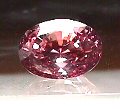
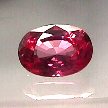
| MOH's scale of hardness: 9 | Toughness : Excellent |
| Refractive Index : 1.762-1.770 (+.009,-.005) | Specific Gravity : 4.00 (+.10,-.05) |
Padparadscha is the Sinhalese word meaning "lotus blossom". Padparadscha is Corundum in the pastel shades of delicate Orange-Yellow-Pink. Padparadscha can run from a more predominant Pink with nice Yellow-Orange mixed in, to the intense pastel tones of predominantly Hot Pink with Yellow-Orange mixed in, this means the Pink would be the more predominant color in the stone but the others are present and visible. At the other end of the color spectrum Padparadscha can run from a more predominant pastel
Orange with nice Pink-Yellow mixed in, to the darker tones of Orange with Pink-Yellow mixed in. One color can be more predominant than the others,
but never without the others. The AGTA Lab recently took a variety of stones that dealers suggested met the criteria of Padparadscha and scientifically defined the color range using an imaging spectrophotometer. Unfortunately, the results of that attempt almost entirely excluded the stones produced from the Umba Valley in Tanzania. TREATMENTS - Approx. 99% of all Sapphire on the market is routinely treated with 'heat' to enhance and stabilize the color. The typical heat treatment process is a permanent process and it does not normally adversely affect the performance, and durability of the gem, but in recent years demand for natural non-heated non-treated top quality Sapphire has caused these gems to command a somewhat higher premium, depending on the gem. When we disclose a gem as enhanced with 'heat', we are typically referring to the heat enhancement procedure performed in Sri Lanka right near the mines, using the lower temperature wood heat method. This 'blow' heat method typically is used on very very good quality Ceylon gems, only to slightly enhance the color and/or to stabilize the color from fading in sunlight. There's no need to worry when you see this enhancement disclosed. Almost all Ceylon Padparadscha Sapphire and virtually all Ceylon Orange Sapphire on the market was subjected to 'blow' heat. This 'blow' heating method has been an accepted trade practice for many many generations. There are other types of heat enhancement procedures, however, one of which is a high temperature furnace fired method. This 'furnace' process is typically performed on Sapphire of a much lesser quality. The goal is to seriously enhance or alter the color and/or clarity of the stone. Most of these gemstones are highly heated, almost to the melting point of the gem, so it is 'cooked' over and over until the gem dealers feel it is a more desirable color and will fetch a better price in the market. We normally do not offer gemstones that have been highly heated. |
|
| ALTERNATE for a DIAMOND | |
| THE ALTERNATE BIRTHSTONE for APRIL (White) | |
| MOH's scale of hardness : 9 | Toughness : Excellent |
| Refractive Index : 1.762-1.770 (+.009,-.005) | Specific Gravity : 4.00 (+.10,-.05) |
White or "Colorless" Sapphires have a great deal of brilliance, are attractive, durable and well priced. Gem quality Colorless Sapphires are not common. In fact they are very difficult to obtain, so prices should continue to move upward in the market. Some Colorless Sapphires have a very light tint of Blue, Yellow, or Pink but are still considered colorless. TREATMENTS - (see Sapphire above) |
|
| ALTERNATE BIRTHSTONE for NOVEMBER (Yellow) | |
| MOH's scale of hardness: 9 | Toughness : Excellent |
| Refractive Index : 1.762-1.770 (+.009,-.005) | Specific Gravity : 4.00 (+.10,-.05) |
Yellow Sapphires are bright gemstones that range in color from a "Light Buttery Yellow" (light fancy yellow), a "Medium Buttery Yellow" or "Light Canary Yellow" (fancy yellow), a "Rich Buttery Yellow" or "Canary Yellow" (fancy intense yellow), to a "Rich Canary Yellow" (vivid yellow). The 3 photos above reflect the variance in color, from Light Yellow similar to the Fancy Yellow Diamond color, to very Rich Canary Yellow similar to the Fancy Vivid Yellow Diamond color. Yellow Sapphire has become extremely popular, since they so closely resemble the color of a Yellow Diamond. TREATMENTS - (see above). |
|
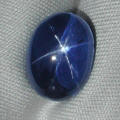
| ALTERNATE BIRTHSTONE for AUGUST | |
| MOH's scale of hardness : 9 | Toughness : Excellent |
| Refractive Index : 1.762-1.770 (+.009,-.005) | Specific Gravity : 4.00 (+.10,-.05) |
| Sapphire sometimes displays a three-ray, six-point star. These star sapphires are cut in a smooth domed cabochon cut to display the effect. The star is best visible when illuminated with a single light source: it moves across the stone as the light moves. This effect, called asterism, is caused by light reflecting off tiny needle like rutile (called "silk") arranged in three sets of parallel needles that intersect one another at 60o angles. Star Sapphire is usually found in Blue colors, but there are also various shades of brown and green that are called Black Star Sapphire. Orange and Yellow Star Sapphires are almost unknown, and very rare. Color Changing Star Sapphires are even more of a rarity. The value of star sapphires are influenced by at least these two things: 1) the intensity and attractiveness of the body color, and 2) the strength and sharpness of the star. Of course all six legs should be fairly straight and equally prominent. Star sapphires rarely have the combination of a fine translucent or transparent color and a sharp prominent star, but when offered, these gems are highly valued and the most expensive. There are not very many chemicals that could attack this gem, but if boiled in a diamond cleaning kit the stone can lose it's polish, also Jewelers pickling solutions containing boron will etch the surface. Our source for fine Star Sapphire is Sri Lanka (formerly Ceylon), known for producing a fine variety of Sapphire. We occasionally come across a Burma Star, and these are even more of a rarity thus commanding an extremely high premium. Other sources for Star Sapphires are Australia, Thailand, Vietnam, Kampuchea, and India. Fine Burma and Ceylon Star Sapphires are highly valued Collectors Gemstones. TREATMENTS - Genuine Star Sapphire is not typically treated with 'heat' or any other treatment to enhance the color or alter the clarity. If a Star Sapphire were to be heated the person doing the heating seriously risks dissolving the rutile needles that cause the asterism to form a star, thus rendering it a plain Cabochon Ruby worth far less than it is as a natural non-heated non-treated Top Quality Star Sapphire. |
|
| ALTERNATE BIRTHSTONE for DECEMBER (Blue) | |
| The 22nd ANNIVERSARY STONE | |
| MOH's scale of hardness: 8 | Toughness : Good |
| Refractive Index : 1.718 (+.017,-.008) | Specific Gravity : 3.60 (+.10,-.03) |
Spinel (spin-NEL) is a genuine Gemstones with a long history. The availability of Red, Pink, Blue, Purple and Orange Spinel and all of their accompanying shades has created confusion between natural Spinel and other Gems for those unfamiliar with this natural stone. TREATMENTS - Typically Spinel is not treated or enhanced. |
|
Blue Spinel
| MOH's scale of hardness : 8 | Toughness : Good |
| Refractive Index : 1.718 (+.017,-.008) | Specific Gravity : 3.60 (+.10,-.03) |
Top Quality Blue Spinel can rival the color of Blue Sapphire, or they are a vibrant cobalt Blue. Other shades include grayish Blue or slightly greenish Blue. Our stones are transparent, faceted Gems with no eye visible inclusions. All are nicely cut, ready for your jewelry or collection. TREATMENTS - Typically Spinel is not treated or enhanced. |
|
Red Spinel
| MOH's scale of hardness : 8 | Toughness : Good |
| Refractive Index : 1.718 (+.017,-.008) | Specific Gravity : 3.60 (+.10,-.03) |
Red Spinel has been confused with Ruby throughout history. Modern gemologists have identified Red Spinel in the Crown Jewels of England, Russia and Iran. If you have ever been to London and seen the British Crown Jewels, you would have noticed a giant red gemstone set in the center of the Imperial State Crown. TREATMENTS - Typically Spinel is not treated or enhanced. |
|
| A NEW BIRTHSTONE for DECEMBER | |
| The 24th ANNIVERSARY STONE | |
| MOH's scale of hardness : 6 to 7 | Toughness : Fair to Poor |
| Refractive Index : 1.691-1.700 (+/-.020) | Specific Gravity : 3.35 (+.10,-.25) |
Tanzanite is known for the exquisite combination of purple and blue hues, one of the loveliest of gems that was discovered in modern times. Tanzanite,discovered in Tanzania in 1967 and introduced to the world in 1968, is mined as a greenish yellowish brownish crystalline material that resembles Andalusite. Tanzanite is basically the Blue variety of "Zoisite", and mined in Tanzania just below the base of majestic Mount Kilamanjaro. Zoisite was originally used in lamp shades and other ornamental art carved items. Tiffany's acquired rights to the trade name "Tanzanite". Tanzanite is sensitive to sudden temperature changes that may cause cracking, the fracture is uneven and brittle, and a jeweler's torch could fuse the gem, so it may be prudent to ask a Jeweler to remove the stone before applying his torch. Tanzanite is easily attacked by hydrochloric and hydrofluoric acid. TREATMENTS - Virtually every Tanzanite is heated to permanently change its color from it's orange-brown state to the spectacular violet-blue color for which this precious gemstone variety is known. Moderate heat (750o-950o F) is applied to get the color you see today ranging from light blue/blue-violet (very inexpensive) to AAA+ Top Gem colors of rich deep Intense blue/blue-violet. The typical heat treatment process is a permanent process that does not adversely affect the performance and durability of the gemstone, so there's no need to worry when you see this enhancement disclosed. |
|
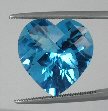
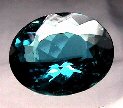
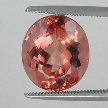
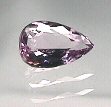
| THE ALTERNATE BIRTHSTONE for APRIL (White) | |
| THE MODERN BIRTHSTONE for NOVEMBER (Yellow) | |
| THE MODERN BIRTHSTONE for DECEMBER (Blue) | |
| The 4th ANNIVERSARY STONE | |
| MOH's scale of hardness: 8 | Toughness : Poor |
| Refractive Index : 1.619-1.627 (+/-.010) | Specific Gravity : 3.53 (+/-.04) |
Natural Precious Topaz is available in several different colors: Colorless (White), Yellowish-Orange with some Peach in it (Imperial) as well as Light Blue, Yellow, Orange, and Pink. Topaz is mainly mined in Brazil, Mexico, Sri Lanka, Africa, and China. TREATMENTS - Natural Imperial Topaz is not treated. Natural Yellow Topaz is not treated. Natural Pink Topaz is typically not treated, however sometimes peach colored topaz can be pinked by gentle heating, which is a permanent process. Swiss Blue, Maxi Blue, and London Blue Topaz are Natural Topaz Gems, however, the blue colors are created by gamma or electron irradiating, followed by heating. The typical treatment process for these blue colors is a permanent process that does not adversely affect the performance and durability of the gemstone, so there's no need to worry when you see this enhancement disclosed. There are many other color varities of Topaz, like Mystic Topaz, and other unusual colors, and they did start out as Natural Topaz Gems, but these have been Coated to create the unusual color varieties. The Coating process is not a permanent treatment, when scratched the original color is visible. There are also unusual colors available that have received a Diffused treatment, and this is a permanent treatment, however if subjected to a jewelers torch, or re-cut, the original color is visible. Coating and Diffused treatment methods should always be disclosed, since it does seriously affect value. |
|
| MOH's scale of hardness: 7 | Toughness : Good |
| Refractive Index : 1.554-1.553 | Specific Gravity : 2.66 (+.03,-.02) |
These inexpensive stones are actually a Citrine, and should be properly called "Smoky Quartz". Unfortunately "Smoky Topaz" is not in the more precious Topaz family at all, just a very inexpensive variety of Quartz. It its sold by many unscrupulous persons and unknowing jewelers as "Smoky Topaz" in an attempt to create more sales in the November birthstone month. |
|
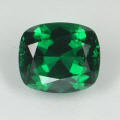
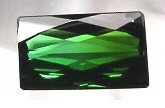
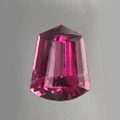
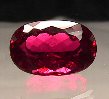
| THE ALTERNATE BIRTHSTONE for MAY (Green) | |
| THE ALTERNATE BIRTHSTONE for JULY (Red) | |
| THE MODERN BIRTHSTONE for OCTOBER (Pink) | |
| The 8th ANNIVERSARY STONE | |
| MOH's scale of hardness : 7 to 7-1/2 | Toughness : Fair |
| Refractive Index : 1.642-1.644 (+.011, -.009) | Specific Gravity : 3.06 (+.20, -.06) |
Tourmaline (TOUR-ma-leen) is a large family of Gemstones with more than 100 hues available. Its name comes from the Sinhalese turmali, meaning mixed Gemstones due to the tendency to confuse
Tourmalines with other Gems. TREATMENTS - The vivid colors like Deep Pink to Red in Tourmaline is Heat or Cobalt Irradiation treated to enhance and stabilize the color. The typical treatment process is a permanent process that does not adversely affect the performance and durability of the gemstone, so there's no need to worry when you see this enhancement disclosed. |
|
| THE ALTERNATE BIRTHSTONE for MAY (Green) | |
| The 8th ANNIVERSARY STONE | |
| MOH's scale of hardness : 7 to 7-1/2 | Toughness : Fair |
| Refractive Index : 1.642-1.644 (+.011, -.009) | Specific Gravity : 3.06 (+.20, -.06) |
Chrome Tourmaline is a rare variety of fine intense Green Tourmaline that is found only in the Eastern African countries of Kenya, Zambia, Namibia and Tanzania. The finest Chromes rival the top color of Emerald and Tsavorite Garnet and offers a more durable stone for jewelry. Chrome Tourmaline's vivid Green color is determined by the presence of Chromium or Vanadium oxides. Chrome Tourmaline was first mined in Tanzania in the 1960's. One of the largest crystal chambers was uncovered by accident in Namibia when an explosives expert shot off excess dynamite. Gem quality Chromes are extremely difficult to locate. Stones over 3 Carats are considered very rare in this Gem. All of our stones are well faceted and eye clean. A very rare Gem with a great investment potential! TREATMENTS - Chrome Tourmaline is not treated. |
|
| THE ALTERNATE BIRTHSTONE for MAY (Green) | |
| The 8th ANNIVERSARY STONE | |
| MOH's scale of hardness : 7 to 7-1/2 | Toughness : Fair |
| Refractive Index : 1.642-1.644 (+.011, -.009) | Specific Gravity : 3.06 (+.20, -.06) |
Green Tourmaline is the most recognized of the Tourmaline colors. Green Tourmalines are typically eye clean stones. Most are cut in the rectangular shapes. Shades range from a pastel yellowish Green to a vibrant Green to dark Green. TREATMENTS - Green Tourmaline is not usually treated. |
|
| MOH's scale of hardness : 7 to 7-1/2 | Toughness : Fair |
| Refractive Index : 1.642-1.644 (+.011, -.009) | Specific Gravity : 3.06 (+.20, -.06) |
Indicolite, also called Indigolite, is the proper name for Blue Tourmaline. One of the finest Indicolite colors are in the Violetish to Greenish Blue color range. Recently another Indicolite find in the Mulungu mine, and Alto dos Quintos mine, in Rio Grande do Norte State, Brazil, have produced limited quantities of various shades of turquoise blue-green material, similar to the color of Paraiba (below), but not as vivid a color due to a lower copper content. These turquoise blue-green colors demand a higher premium than some of the Blue Indicolite, but should not as high as Paraiba, which only comes from the Paraiba mine. Our source for fine Indicolite Tourmaline is Sri Lanka (formerly Ceylon), Brazil, and Africa, all known for producing the finest varieties of Tourmaline. Other sources for Indicolite are Madagascar, California and Maine. TREATMENTS - Indicolite Tourmaline is not usually treated. |
|
| MOH's scale of hardness : 7 to 7-1/2 | Toughness : Fair |
| Refractive Index : 1.642-1.644 (+.011, -.009) | Specific Gravity : 3.06 (+.20, -.06) |
Paraiba Tourmaline (cuprian elbaite) is another of the world's most unusual Gemstones. At first it was called "Electric" then "NEON." This new gemstone was discovered in Brazil in 1989. It's brilliant blue and green are more vivid than any ever seen before. The term "NEON" accurately describes the tone of color. It is so vivid it will shock you with its beauty. You can see this stone from across the room! These vivid turquoises, electric blues, rich twilight blues, and neon greens haven't been seen with any consistency in any other gemstone variety. Paraiba-type tourmalines belong to the elbaite species, but contain manganese (Mn) and copper (Cu) with a Cu content of up to 2.30 wt% CuO, as well as bismuth (Bi). From the beginning, the trade labeled these cuprian elbaite tourmalines as "Paraiba"
(Fritsch et al., 1990). The name quickly caught on and is now mentioned as a valid trade name in the CIBJO Rules. Copper was quickly labeled as the principle cause of the rich color. TREATMENTS - Fine Gem Quality Paraiba Tourmaline is never treated. However, there are heated gems on the market selling for a fraction of the cost of fine quality natural Paraiba. It would be prudent to purchase only gems that have been certified by a qualified independent gemologist and identified as natural non-enhanced Paraiba. The heated gems on the market start out as poor color stones that are heated to enhance the color, and the neon effect is lost during the heating process, so they are never as good as the natural gems. These lower quality heated gems are always lower priced, and will never be accepted as true collector specimens. |
|
| THE MODERN BIRTHSTONE for OCTOBER (Pink) | |
| MOH's scale of hardness : 7 to 7-1/2 | Toughness : Fair |
| Refractive Index : 1.642-1.644 (+.011, -.009) | Specific Gravity : 3.06 (+.20, -.06) |
Pink Tourmaline has become a favorite for mounting because it is available in so many shades, ranging from pure light Pink to intense "HOT" Pink to orangy-Pink and Fuchsia Pink. Gemologists think that natural irradiation produces the Pink, Red and Violet colors in Tourmaline. To enhance the color to get the very HOT Pinks, you can expect that it was probably Cobalt treated. The darker reddish colors tend to have more natural inclusions than the other Tourmaline colors because they are formed near the center of the crystal pocket and receive more stress and pressure during formation. TREATMENTS - The vivid deep Pink
colors in Tourmaline are achieved by Cobalt Irradiation treatment. This produces deep Pink from very light Pink stones. The typical treatment process is a permanent process tha t does not adversely affect the performance and durability of the gemstone, so there's no need to worry when you see this enhancement disclosed. |
|
| THE ALTERNATE BIRTHSTONE for JULY (Red) | |
| MOH's scale of hardness : 7 to 7-1/2 | Toughness : Fair |
| Refractive Index : 1.642-1.644 (+.011, -.009) | Specific Gravity : 3.06 (+.20, -.06) |
Rubellite is the deepest shades of Red that appear to be a Ruby-like RED. Like all Tourmaline, it has strong pleochroism. Eye clean Rubellite is one of the most expensive in Tourmaline since most Rubellite has visible inclusions. Clean Rubellite is very rare, so if you see a super clean stone it's probably a Pink Tourmaline or a Rubellite Garnet. TREATMENTS - The deep Red colors in Tourmaline are typically achieved by Cobalt Irradiation treated to enhance and stabilize the color. The typical treatment process is a permanent process that does not adversely affect the performance and durability of the gemstone, so there's no need to worry when you see this enhancement disclosed. |
|
Watermelon Tourmaline
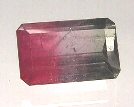
| MOH's scale of hardness : 7 to 7-1/2 | Toughness : Fair |
| Refractive Index : 1.642-1.644 (+.011, -.009) | Specific Gravity : 3.06 (+.20, -.06) |
Sometimes the mineral deposit in the Tourmaline crystal will form a color band along its length or width which will then be appropriately called Bi-color, Tri-color or Watermelon if the colors are Green and Red with a White separation. The vast majority of the stones are obscure or heavily included. Clean Gems are much more expensive. Definitely one-of-a-kind Gems. Watermelon Tourmaline is a highly valued Collectors Gemstone. TREATMENTS - Watermelon Tourmaline is not treated. |
|
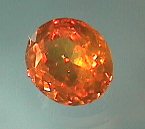
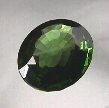
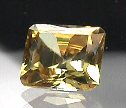
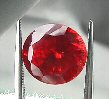
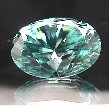
| THE ALTERNATE BIRTHSTONE for DECEMBER (Blue) | |
| MOH's scale of hardness : 6-1/2 to 7-1/2 | Toughness : Poor to Good |
| Refractive Index : 1.925-1.810 | Specific Gravity : 3.90 to 4.73 |
Zircon (ZUR-con) is a natural Gemstone available in an array of colors. TREATMENTS - Almost all Blue Zircon on the market is heat treated, whereas the other colors are not. The typical treatment process is a permanent process that does not adversely affect the performance and durability of the gemstone, so there's no need to worry when you see this enhancement disclosed. |
|
Zultanite
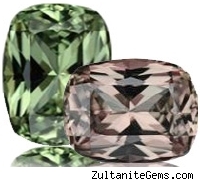
| MOH's scale of hardness : 6-1/2 to 7 | Toughness : Poor to Good |
| Refractive Index : 1.701-1.745 | Specific Gravity : 3.20-3.50 (mean 3.40) |
Zultanite is a member of the mineral family Diaspore, a hydrated aluminum oxide plus manganese. It is commonly found in pale pastel yellowish-greens and changing to pinkish-brown colors. Zultanite is typically eye-clean with some inclusions under magnification.> |
|
|
|||||
Types of Cuts for Gemstones |
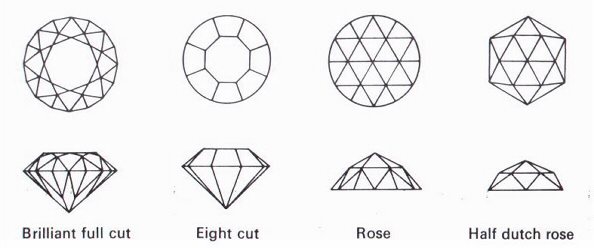
|
Step Cut A simple type of facet cut, specially used for colored stones, but also occasionally for diamonds. Several facets are cut parallel to the edges, the facets becoming steeper towards the girdle. The lower part usually has more facets than the upper part. A step cut can be used in combination with other cuts i.e. Oval-Step cut or Square-Step cut, etc. |
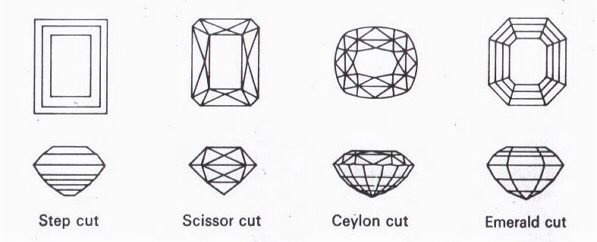
|
Antique cuts are very similar to the Ceylon cut and Cushion cut in the face shape, being ovalish and squarish, and the second being more ovalish and rectangularish. The Antique cut is also a primary cut used on ruby and sapphire that is cut in Ceylon (Sri Lanka). This very popular cut varies in the type of facets used in both upper and lower parts like the Ceylon cut, Old Mine cut, Antique cut, or Cushion Cut. The pavilion is normally a mixed cut to create as brilliant a stone as possible, except the cut is normally a shallower cut than the typical Cushion cut. This cut allows the cutter to obtain maximum weight with a big face, and like the Cushion it is not always symmetrical. |
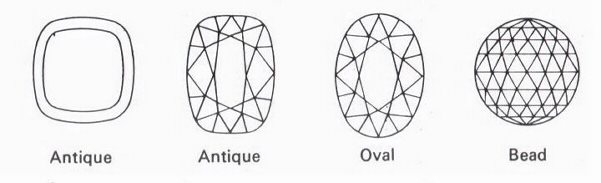
|
Other Cuts |
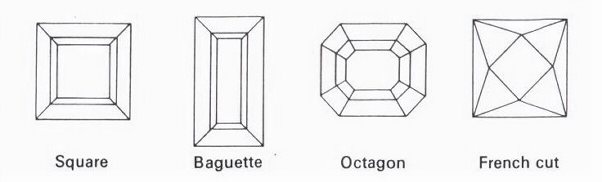
|
Pear cut, Navette or Marquise cut (pointed elliptical), Pendeloque or Drop cut (pear-shaped), Briolette cut (pear-shaped with crossed faceted bands)... |
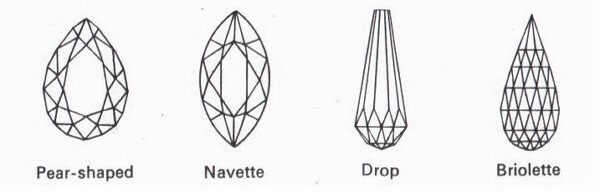
|
Table Cut The simplest type of step cut which is very flat with a large table. It is often used for seals or rings for men i.e.. onyx with a class logo, etc. |
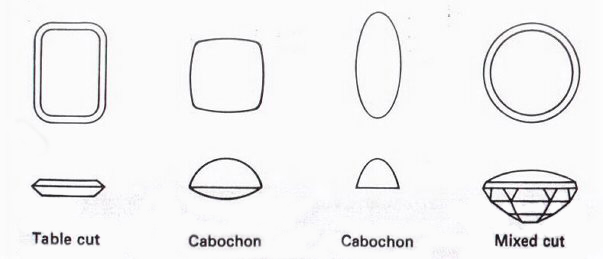
|
Barrel cut or Olive cut (small barrel-shaped), Trapezoid cut, Heart-shaped cut, Escutcheon-shaped cut, and many many other Fantasy cuts not pictured like Freeform, Trillion, Triangle, Princess, Radiant, Star, Modified Scissors, Spherical, Hexagon, Coats of Arms, and many others. |
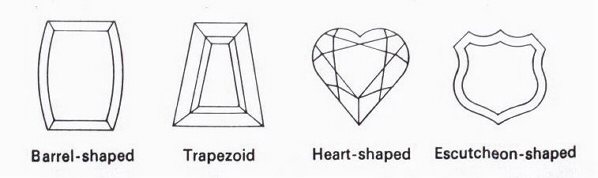
|
|
|
 |
||
|
|
||
email
 Contact Contact
|
||
| 1-805-735-7103 Hours : Mon-Fri 10am-5pm Pacific Time 24 hours Voice Mail |
||

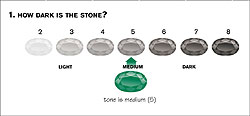
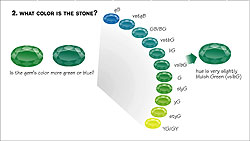 Next, the gemologist
estimates the overall hue. Look at the illustration to the left to see which hue compares best to the examples on the hue wheel. The sample stone is
green, with a touch of blue, so the gem is very slightly bluish green. The hue shows up as bright flashes of brilliance when you look at the stone in the
face-up position. In a stone with a window that occupies over 50 percent of the face-up area, the gemologist also grades the window as the dominant color and
then the brilliance as the additional color.
Next, the gemologist
estimates the overall hue. Look at the illustration to the left to see which hue compares best to the examples on the hue wheel. The sample stone is
green, with a touch of blue, so the gem is very slightly bluish green. The hue shows up as bright flashes of brilliance when you look at the stone in the
face-up position. In a stone with a window that occupies over 50 percent of the face-up area, the gemologist also grades the window as the dominant color and
then the brilliance as the additional color. 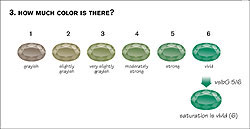 Lastly, the gemologist estimates the saturation level. Look at the illustration to the right. Saturation is how much color the gem has. If it does not appear to
be grayish or brownish at all, it has strong to vivid saturation. Saturation is also where any additional colors such as those due to color
change, pleochroism, color zoning, and windowing less than 50% are noted. Saturation has a moderate to strong effect on appearance. Additional colors, like a window as noted above, are graded only if they are moderate to strong.
Lastly, the gemologist estimates the saturation level. Look at the illustration to the right. Saturation is how much color the gem has. If it does not appear to
be grayish or brownish at all, it has strong to vivid saturation. Saturation is also where any additional colors such as those due to color
change, pleochroism, color zoning, and windowing less than 50% are noted. Saturation has a moderate to strong effect on appearance. Additional colors, like a window as noted above, are graded only if they are moderate to strong.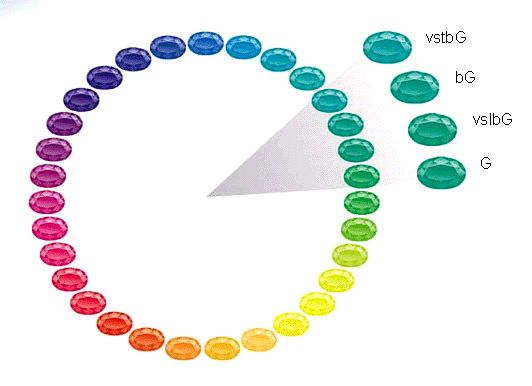
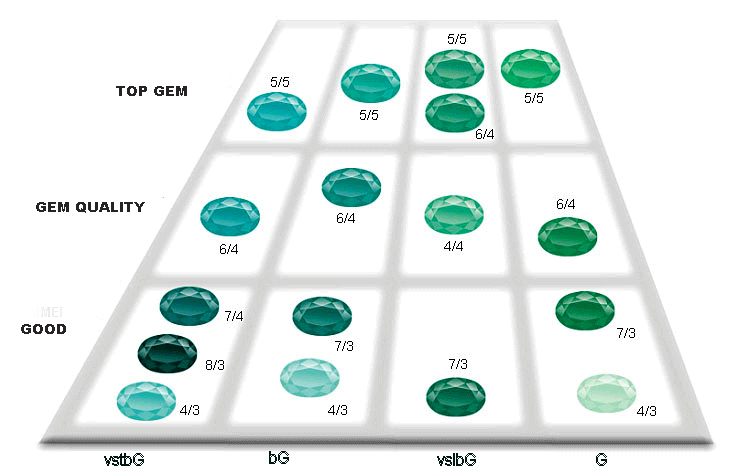
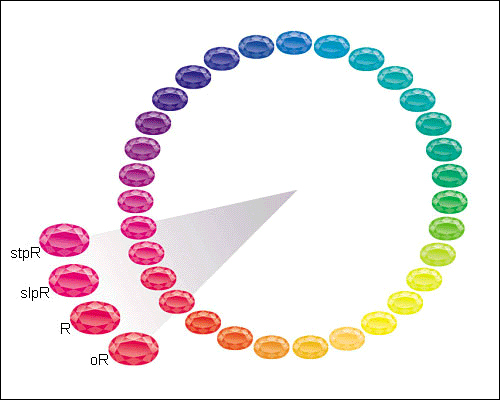
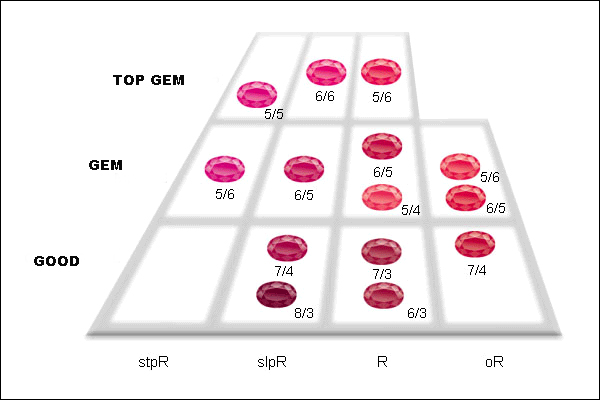

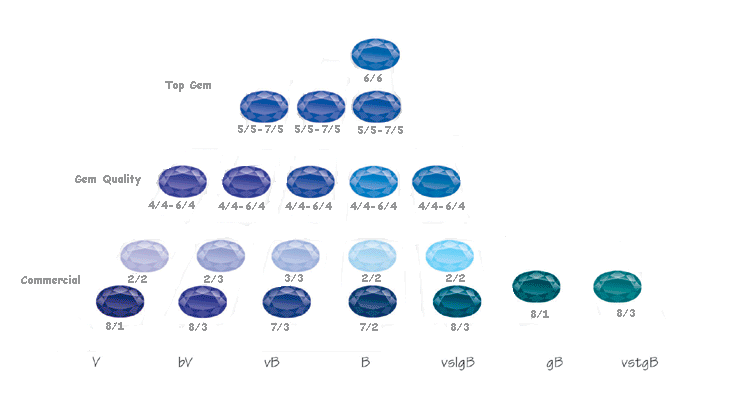
 This stone, quite possibly the most famous gem in the entire world, is the Black Princes Ruby. It is as large as a chicken egg, weighing approximately 170 carats, and measuring five centimeters in length, the Black Princes Ruby is a spectacular red, and it seems to glow with an internal fire of its own. It is so remarkable that it has become one of the worlds most cherished jewels. Guess what, the Black Princes Ruby really isn't a ruby at all.. Its actually a Red Spinel. This Black Princes Ruby is by far the worlds most famous Red Spinel, it is definitely not the only one ever possessed or coveted by kings, queens, and emperors. The Timur Ruby, also in the Crown Jewels of England, is even larger, weighing 361 carats, or more than 70 grams. It is inscribed with the names of six of its former owners. The Kremlin Museum in Moscow has another giant Red Spinel that probably belonged to the Tsar; this one weighs 414 carats. The most dazzling collection of fine red Spinel is found in the Crown Jewels of Iran. The largest one is around 500 carats, and the biggest on record. There are a handful of others weighing over 100 carats, a few with the name of Jahangir, a Mogul emperor over 350 years ago. Once you have seen a fine Red Spinel, you will easily understand why ancient royalty esteemed it as much as Ruby, and sometimes even more. Top quality Red Spinel and Rubies have superb pure red colors, and they have a fluorescence, or a glow, in natural light. Not only do the two gems have the same color and fluorescence, but they are often found together in the same mines, and the physical properties of the Ruby are very similar to Spinel. Today Red Spinel is not as abundant as Ruby, in fact it is quite difficult to find. The old mines in Afghanistan that produced so many of the giant stones in the past are worked out, and the gem gravels of Sri Lanka and Africa, which give up many beautiful pastel colored Spinel, only rarely contain gems with the pure intense red color of the Black Princes Ruby. Now only the famous mines of Mogok, Burma, hold substantial quantities of fine Red Spinel. No one really knows how many gems remain there undiscovered, but perhaps there is still one that will rival even the Black Princes Ruby and remind us all of the days when kings and emperors held sway over vast domains and counted their wealth by the natural beauty that they owned. Fine Red Spinel is less costly per carat than Fine Ruby, but as with Ruby, the larger and redder the Spinel, the higher the cost per carat. Our stones are priced according to the size and the depth of color. They are transparent and eye clean.